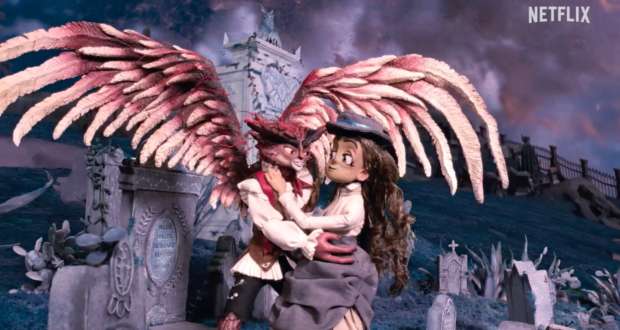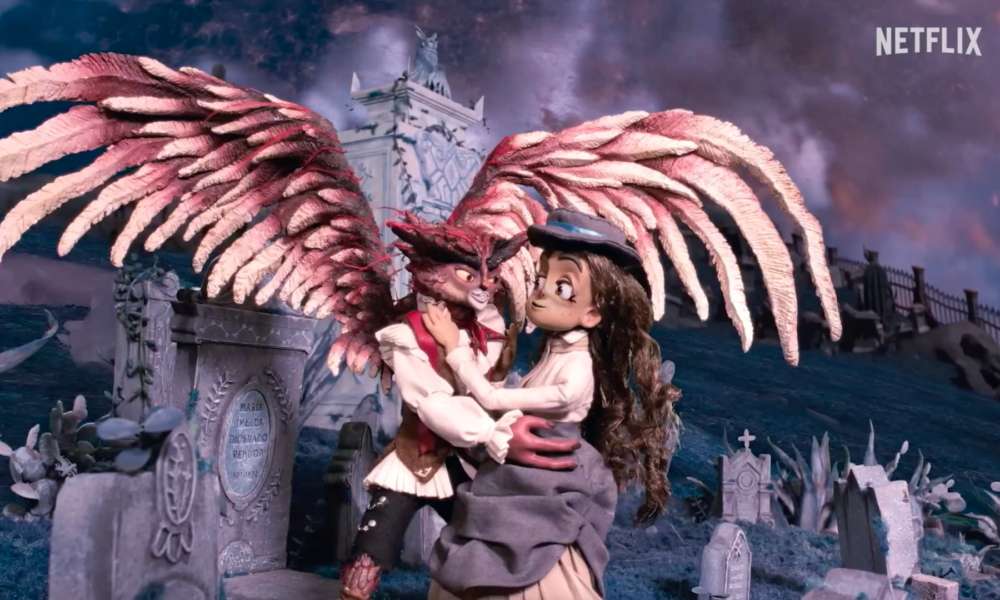

From the very pantheon of stop-motion animation, Mexico has recently released its first-ever independently made feature film. I am Frankelda is a gothic fantasy musical which is now available on Netflix. Arturo and Roy Ambriz and their studio, Cinema Fantasma, first introduced their series Frankelda’s Book of Spooks. Frankelda is a prequel to it, and dare I say, a work of art!
The story unfolds around Francisca Imelda (Frankelda), an aspiring young female author who writes creative horror stories. Subconsciously, she ends up bringing her imagination to life. So here’s a deep dive into its conception, stop-motion craft, rich folkloric myths, gothic architecture, and costume designs to die for.
Two Highly Passionate Artists Found Themselves a Gandalf
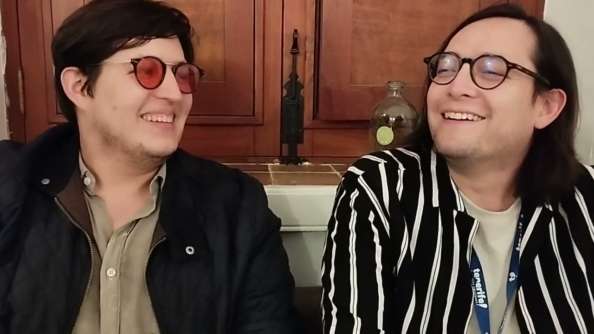
The story of Francisca Imelda began with a 30-minute special for Cartoon Network. Ambriz brothers then created their HBO Max series Frankelda Book of Spooks and soon realized the potential multi-layered storytelling waiting to be told. The magnificent world of Topus Terrentus explored by the 18-year-old Mexican writer needed its own spotlight.
Two of them did what almost no other artist does.
To fund the production of the film, they gave away their family house mortgage. They even took loans to lock in a co-production deal with HBO Max Latin America. Not to forget that the Ambris Brothers have a remarkable legacy of building their stop-motion studio “Cinema Fantasma” from the ground up. They revealed how the film is the story of the past ten years for them. They also spoke about the troubles that they faced as two young animators in the industry. We know that Hollywood is saturated with big studios and ridiculously massive budgets. Guillermo Del Toro stepped in as the knight in shining armour for them. Or in their words, “Gandalf”.
Guillermo Del Toro, our beloved monster geek, was a guiding light as somebody who shares a knack for goth and everything freaky. He taught them how to work in the corporate world, secure deals, find distribution, and even helped them with re-edits. His encouragement and practical support led them to lock a deal with Netflix for international distribution. The rest is history!
Stop-Motion Animation: A Love Letter to Artistic Labor

Guillermo and the Ambriz Brothers have another thing in common. Both deem AI as an object of disdain. Their allegiance to craftsmanship and visual storytelling is a philosophical and moral choice in this heavily impacted world of AI. Therefore, the imperfections and the flaws become a nod to the immense hard work put into it. One may get two to three seconds of footage on an average day. It doesn’t take much to imagine how they spent two-and-a-half years in production to simply animate the film. In addition to that, the studio employed 20 animation units.
The puppets were constantly on the move from one unit to another due to minimal funding. Despite that, the film is appreciated for its agile production. The finished product did not disappoint either. There’s 2D animation, oil-painted shots, paper cutouts, and live-action sequences. Everything one can expect from a product made by labor fueled by passion.
Topus Terrentus is a Palimpsest of Folkloric Myths
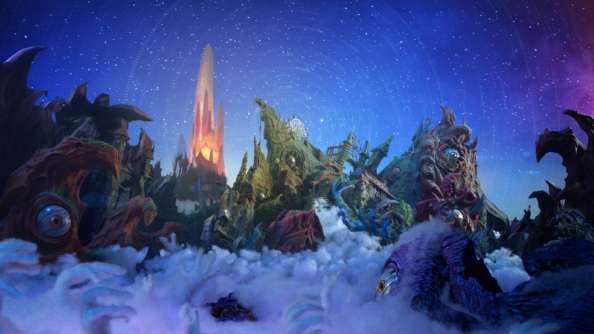
The quaintly intricate world of this project was one of the many reasons for its conception. Roy Ambriz keenly focused on the many mythological references that were there in the film to create a palimpsest of folk traditions. The “Realm of the Spooks” features so many creatures that justify the gothic logic of this fantasy.Something deeply adherent to the story is its nightmarish phantasmagoria. To illustrate that, Amriz Brothers borrowed monsters from Mexican and Latin American folklore along with original songs to make it a musical delight.
“Don Coco” who plays the secondary antagonist in the films has its roots from Latin American tales as the classic Hispanic bogeyman. Described as El Coco / El Cucuy, they’re monsters who lived under beds. They were referenced by adults to frighten children to sleep early and to have good behavior. “Chupacabra”, known as the goat-sucker, also has its roots in Latin American folklore. Known as the goat-sucker, it scared the farmers of eating their livestocks for many years. Small, sprite-like guardian spirits from Mayan mythology called Aluxes (Aluxo’ob) are also featured here. These are knee-length creatures who live in forests playing mischievous tricksters.
Apart from Mexican/Latin American creatures, other mythologies have borrowed its folkloric monsters to the film. “Procustes” (spider-like villain) is a direct reference from Arabic, or more relevantly Greek mythology. “Procustes” is the name of a tyrant and is portrayed no differently in the film. The two-headed griffin, a symbol of cosmic balance found on ancient Persian coins, could also be seen in the film. Creatures from other European and Aztec mythologies can also be found. These creatures keep the spellbinding charm of goth folklore laced throughout the movie.
Gothic and Literary Traditions
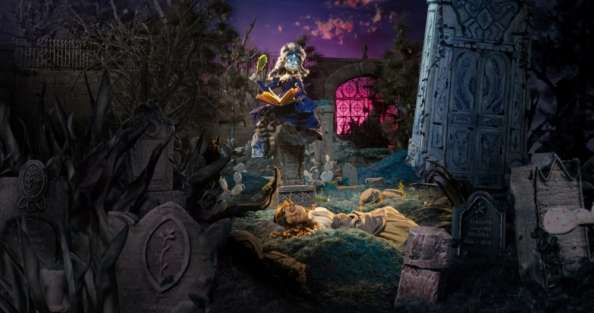
I am Frankelda centers around its gothic foundation and is loaded with many European literary references too. We can see detailed engravings of Gustave Doré using Dante’s Divine Comedy as its inspiration. The tradition is further strengthened by Mary Shelley, the mother of Gothic, autobiographical touch which aligns with the movie’s central conflict. Like Shelley, Frankelda is a woman in quest of making a name for herself as a writer in the 19th century. This unconventional pathway for women of the 19th century came with hardships. These are depicted through Frankelda’s journey as she is also troubled by men like Procustes who try to steal her work. Moreover, Frankelda shares more with Victor Frankenstein. They both create monsters who are no longer in control of their creators.
The Baroque architectural designs in the film add another layer of visual storytelling through Gothic art. Even the costumes worn by the female lead are directly related to the Victorian traditions. The caricatures come in mini sizes and wear materials like fur and feathers, alluding to the tiny details which were focused upon in the film too. A special thanks to the Ambriz Brothers’ mother who helped with costumes and designs. Everything drips of brilliant opulence. This goes to Roy’s wife, Ana Coronilla, who serves as the film’s art director, and Arturo’s wife, Irene Melis, who is the film’s cinematographer.
In today’s age of AI animation and heavily budgeted films which are made in the studios, this one felt like a breath of fresh air. I am Frankelda is an act of pure labor and passion.
Let us know your thoughts if you’ve watched the film.
Happy Watching!