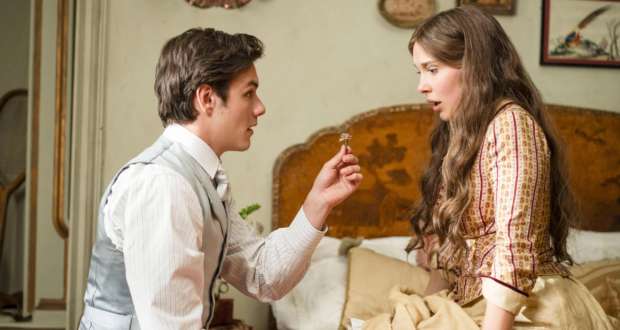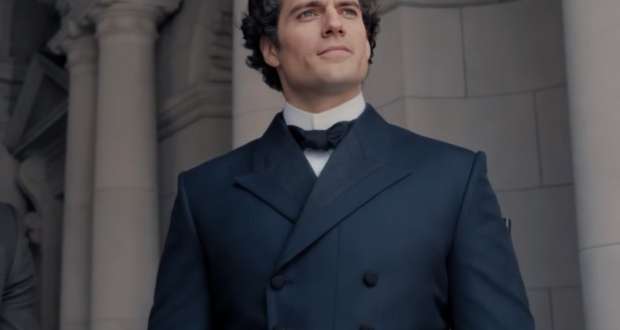

Enola Holmes 3 is a case study in cinematic colonial apologia. These movies have always been topped with an edge of politics, romping and frolicking through the feminist tensions of the old Victorian era. The third installment is no different. Cast members Millie Bobby Brown, Louis Partridge, Henry Cavill, and Helena Bonham Carter all returned for their roles. Only this time the political themes transcend the feminist issues as the setting changes from Victorian England to Malta. So initially what one sees is the dismantling of colonial history and the critique of the British intrusion in countries like Afghanistan. Yet the characters and plot it weaves this critique around end up delegitimizing the very framework it dares to destroy.
Binary Alert: Good Colonizers vs Corrupt Colonizers
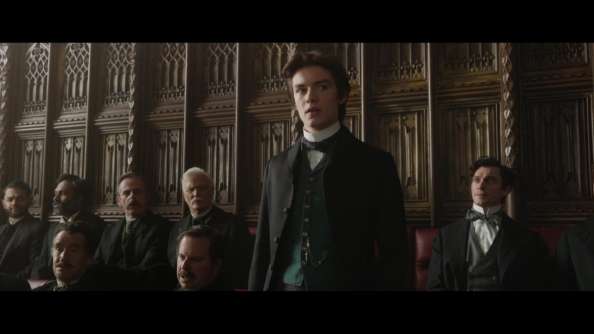
The central conflict of the film revolves around the conspiracy of the lost gold, stolen by the British from Afghanistan during the war of Khost in the 1880s. Lord Tewkesbury grows up thinking that his father was a good man. Later on, he goes through a cataclysmic realization that his father, Lord Peter, was the one in charge of this mission. The film therefore establishes a strange logic. Instead of calling out the very institution of imperialism, it presents it as an inevitable force, something which is ‘there’. It further insinuates how colonialism is only tarnished in history due to the presence of a few bad apples and nothing more. Disturbingly enough, it fosters the embryo of a scandalous binary of the ‘good’ slash ‘corrupt’ colonizers, where the term ‘colonizer’ remains unperturbed.
The film attempts to unravel the atrocities of the British in history while offering sanitized figures from the very system. One of those figures is Lord Tewkesbury, who appears to be a man of conscience as he gets to have his own redemption arc. Abandoning his father’s name and taking his mother’s name, he is freed of the tainted legacy that came with his father’s title. I believe more than the doing-the-undoing sequence, it would’ve been way classier if there was any sequence that portrayed the accountability of the West against the war crimes that they committed.
The ‘Brown’ Dr. Watson as “The Native Informant”
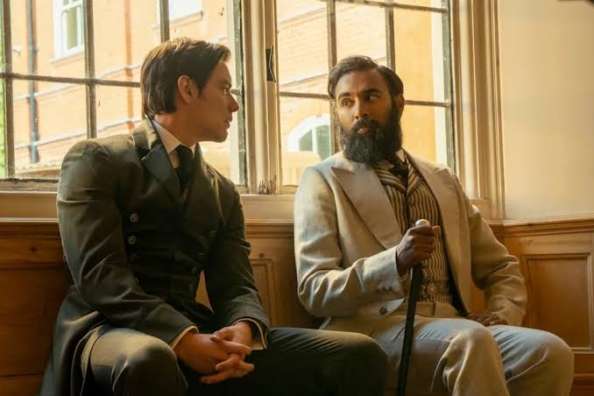
The film tragically fails to critique the British invasion through another one of its characters. We’re acquainted with Dr. Watson as a South Asian man in the second film. Why did the creators do that? Here’s your answer: to neutralize the conflict of the subcontinent. Upon the revelation of Lord Peter’s evil schemes and Tewkesbury’s heartbreak over it. Dr. Watson shares his father’s backstory. He reveals how his father believed that the British deserved to rule India. This was anything but an act of nobility for him. Although it exposes the psychological implications of the colonial subjects, it also suggests moral equivalency. Twisting the very details of the unlawful and abhorrent treatment of the colonized, it further affirms the presence of a colonial subject who willingly conformed to British rule. This forceful bridging of violence and subjugation is an attempt to sell an ahistorical past to make the audience sympathize with these characters.
The White Savior and the Black Villain
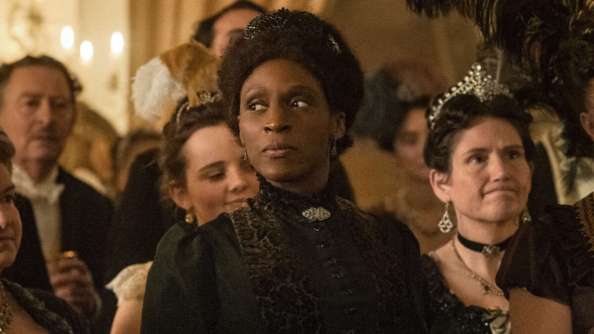
The portrayal of a black villain is not problematic; the poorly-written character is. Moriarty is a racially repressed woman of color in the Victorian era, protesting for her rights. Stripped away from opportunities as a woman, a victim of double marginalization. She is furious, and her rage is directed towards the White and the wealthy. Encapsulating the feminine rage of a socially challenged woman could be a daunting task that needs to be tackled with utmost sensitivity. This is something Netflix decided to ignore wholeheartedly. What it delivers is a psychologically dark murderer presented as a spectacle of horror. Instead of any characteristic nuance, she is a dark-skinned predator with both questionable sanity and low morality. The movie once again sells a masked version of the inequality which prevailed in Britain in the form of a deranged woman as its product who needed to be stopped.
The Climax Scene: The Aristocrat Saves the Day!
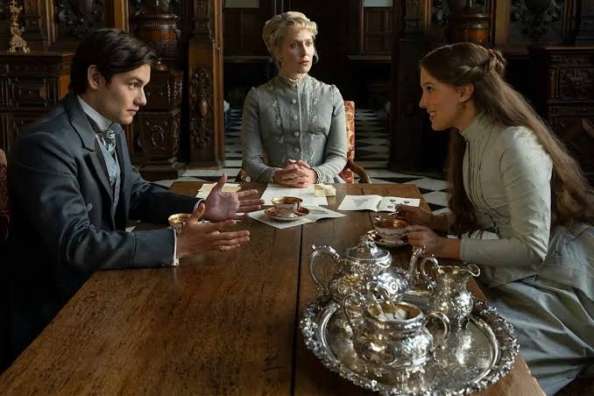
As the movie reaches the climax, Moriarty is defeated with a gun pointed towards her by the one and only Sherlock Holmes. Enola stops him from killing her. Sherlock responds that it is necessary, as she will run away again if he doesn’t. Suddenly, amidst this atmosphere of indecision, Tewkesbury’s mother, Lady Tewkesbury, hits her on the head. The three of them overpower her. Tewkesbury already has a redemption arc. So now her mother remains the only member of the family who needed to be portrayed as a force opposite to Lord Peter, the corrupt colonizer. Her abduction and this act of bravery, therefore, feels rather forced.
This politicization and inaccurate historical narratives have not made Enola Holmes 3 as mysterious and watch-worthy as its predecessors in the franchise. However, the cast delivered some great acting moments. Moreover, we’re so here for the chemistry and nostalgia these movies have brought to many of its fans.
Let us know if you enjoyed it or not.
Happy Watching!