2025 has been a year of remarkable contradiction in cinema: a landscape where blockbuster spectacle and intimate, character-driven storytelling didn’t just coexist, but actively challenged one another. It was a year defined by ambition—sometimes overwhelming, sometimes exhilarating—as filmmakers pushed technological boundaries while also returning to deeply human concerns. From crowd-pleasing epics designed for the largest screens imaginable to quiet, risky films that thrived on nuance, 2025 reminded us why movies remain one of the most vital art forms in popular culture.
Having watched nearly 300 new releases this year, I’ve experienced the full spectrum of what 2025 had to offer: the triumphs, the misfires, and the fascinating experiments that landed somewhere in between. Seeing that many films back-to-back sharpens perspective. Patterns emerge. Trends become impossible to ignore. What initially feels groundbreaking can start to blur together, while truly exceptional films rise above the noise with clarity, confidence, and purpose. This volume of viewing also reinforces an essential truth—greatness isn’t defined by budget, genre, or hype, but by execution.
The films that stand out as the best of 2025 are the ones that linger—works that reward reflection long after the credits roll. Some achieved this through sheer technical mastery, others through daring narrative choices or emotionally devastating performances. Together, they form a snapshot of a year in cinema that was restless, evolving, and often audacious. Of course, this list is entirely my opinion.
15. Clown in a Cornfield
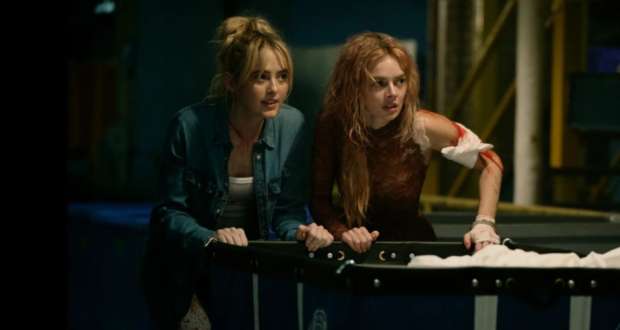
Eli Craig’s Clown in a Cornfield is a smart, savage slasher that combines classic genre thrills with modern commentary, delivering a taut and blood-spattered ride through rural America’s anxieties. Based on Adam Cesare’s novel of the same name (one of my all-time favorite novels), the film is more than just a masked killer in a cornfield—it’s an allegorical reckoning between generations, set against a backdrop of small-town decay and unrest. With a truly awards-worthy performance by Katie Douglas and confident direction from Craig (Tucker & Dale vs. Evil), this adaptation succeeds in turning familiar tropes into something freshly terrifying.
Katie Douglas proves to be a phenomenal lead. As Quinn, she’s cautious, smart, and strong-willed without falling into the archetypal “final girl” clichés. She feels like a real person—someone who wants to move on, connect, and survive. Her dynamic with Carson MacCormac’s Cole—an outcast teen trying to push back against his authoritarian father—is tender and believable, giving the film a quiet emotional current even as the body count rises.
Clown in a Cornfield is a lean, mean, and thoughtful slasher that offers both genre thrills and biting commentary on generational conflict. With strong performances, inventive kills, and a timely message hidden beneath its blood-soaked clown mask, Eli Craig delivers one of the most memorable slasher entries in recent years. It’s a tale of tradition versus transformation—told with a sickle, a scream, and a little sinister smile.
14. Thunderbolts*

It’s really no secret that I’m one of the seemingly few people who has consistently loved the recent phases of the MCU, even if I can admit that they’re nowhere near as good as the good old days ten years ago when the massive cinematic franchise kept things grounded and simple instead of complicating things by introducing multiversal stories.
If you’re looking for a trip back to the “good old days” of Marvel, then you don’t have to look any further than Thunderbolts*, which is not only one of the greatest movies of the year so far, but also one of the finest entries in this decade-spanning cinematic universe ever.
Directed with precision and visual flair by Jake Schreier, from a sharp, thematically rich screenplay by Eric Pearson and Joanna Calo, this film is a stunning success on every level—narrative, performance, and emotional resonance. It blends explosive action with soul-searching character drama, proving that Marvel’s thirty-sixth entry isn’t just another team-up spectacle—it’s a daring study in redemption, accountability, and mental health.
Florence Pugh delivers what can only be described as an Oscar-worthy performance as Yelena Belova. Having already proven herself a force within the MCU in both Black Widow and Hawkeye, Pugh elevates her role here to tragic heroine status—layered, fierce, vulnerable, and deeply human. Her Yelena is not only a razor-sharp tactician and fighter but also a woman grappling with guilt, identity, and survival. Whether facing off against impossible odds or confronting the ghosts of her past, Pugh commands every frame with a gravity and authenticity rarely seen in superhero cinema.
Thunderbolts* is a reminder of what superhero films can be when they push past formula. It’s character-driven but epic, funny but melancholic, bleak but hopeful. It challenges assumptions—not just about its characters, but about what the genre can say about trauma, responsibility, and the courage it takes to heal.
It’s rare that a Marvel film feels like both a bold reinvention and a natural continuation. Thunderbolts* manages to do both. It’s the kind of film that lingers long after the credits roll, not because of what it sets up, but because of what it says. And in a franchise often driven by spectacle, that kind of soul is worth celebrating.
13. The Fantastic Four: First Steps

(L-R): Ebon Moss-Bachrach as Ben Grimm/The Thing, Vanessa Kirby as Sue Storm/Invisible Woman, Pedro Pascal as Reed Richards/Mister Fantastic and Joseph Quinn as Johnny Storm/Human Torch in 20th Century Studios/Marvel Studios’ THE FANTASTIC FOUR: FIRST STEPS. Photo courtesy of 20th Century Studios/Marvel Studios. © 2025 20th Century Studios / © and ™ 2025 MARVEL.
We all know the old adage: the third time’s the charm. But in the case of The Fantastic Four: First Steps, the fourth time’s the charm. Indeed, this is Marvel’s fourth attempt at bringing their First Family to the silver screen, after many failed attempts to successfully do so (namely 2015’s Fantastic Four, oftentimes referred to as Fant4stic).
Not only is First Steps the best Fantastic Four film by a long shot, but it’s also the best Marvel movie we’ve had in years. Between this and Thunderbolts*, it truly feels like the MCU is returning to its glory days that so many fans have been waiting years and years for. And much like Supermanearlier this month, it’s nice to see that comic book films this year are finally embracing the comic book aspect, as both that film as this one feel like comic books brought to life.
Casting the Fantastic Four has long been a challenge for filmmakers, but here, every choice is pitch-perfect. Pedro Pascal brings an empathetic, cerebral gravitas to Reed Richards — a man as burdened by his intellect as he is driven by his hope. Reed is far from the cold, emotionless genius he’s often portrayed as; Pascal infuses him with warmth, humanity, and moral conflict.
But the heart and soul of the film belongs to Vanessa Kirby as Sue Storm. Kirby delivers a stunning performance — fierce, vulnerable, maternal, and commanding — that easily places her among the MCU’s best characters to date. Sue is not merely “the wife” or “the team’s emotional anchor.” She is the team. Her arc — from protector to hero to mother to savior — is awe-inspiring. Her quiet strength and explosive power are handled with reverence and nuance, making her one of the most memorable MCU leads in recent memory.
And then there’s Julia Garner as Shalla-Bal, the Silver Surfer. A revelation. Her portrayal is ethereal, tragic, and quietly powerful. Garner’s eyes do much of the acting — sorrow, fury, doubt, and a glimmer of hope — and she elevates the Silver Surfer mythos with poignant complexity. Shalla-Bal and Sue are easily the film’s standouts — two women of immense power, heart, and internal conflict, united by their determination to protect what matters most.
The Fantastic Four: First Steps is an emotionally rich, visually stunning, and thematically resonant superhero story that revives Marvel’s First Family with intelligence, heart, and imagination. Matt Shakman and his talented cast and crew have crafted an origin tale that doesn’t feel like a retread, but rather a necessary evolution — one that stands tall alongside the best of the MCU.
12. Weapons

Zach Cregger’s Weapons is not just another mystery horror film—it’s an impeccably crafted, slow-burning nightmare that grips you from its eerie opening moments and refuses to let go until the final frame. Cregger, who wrote, co-scored, produced, and directed, delivers a work of unnerving precision, blending an intricate mystery with visceral dread and an undercurrent of emotional depth. With a cast led by Josh Brolin, Julia Garner, and Alden Ehrenreich, this is a film that feels both chillingly modern and steeped in classic horror sensibilities.
From the very start, Weapons plunges the viewer into an unnerving setup: seventeen children from the same classroom vanish on the same night, without explanation or warning. Cregger’s direction treats this premise with chilling restraint, never sensationalizing the incident, but instead letting the quiet horror of the absence take root. The sense of dread builds slowly—each scene dripping with unease, each exchange feeling loaded with unspoken threat. The disappearance becomes a catalyst for a web of paranoia, grief, and suspicion that engulfs the entire town of Maybrook, Pennsylvania.
One of the most impressive aspects of Weapons is its narrative structure. While many modern horror films opt for quick scares and blunt-force shocks, Cregger takes his time, letting tension accumulate like fog over a darkened street. The investigation unfolds through the perspectives of multiple characters, each one drawn with care and emotional authenticity. Archer Graff (Brolin), a grieving father, is a study in controlled desperation. Justine Gandy (Garner), the schoolteacher at the center of community suspicion, becomes both a moral anchor and an increasingly unreliable narrator in the eyes of those around her. Meanwhile, Alden Ehrenreich’s Paul Morgan, a police officer with conflicted loyalties, adds an undercurrent of human volatility to the story.
Weapons is a razor-sharp, emotionally resonant, and unflinchingly tense work of mystery horror that lingers long after the screen goes dark. Zach Cregger has delivered a film that doesn’t just aim for fear—it aims for the soul. This is not merely a great horror film; it’s a great film, period.
11. Train Dreams
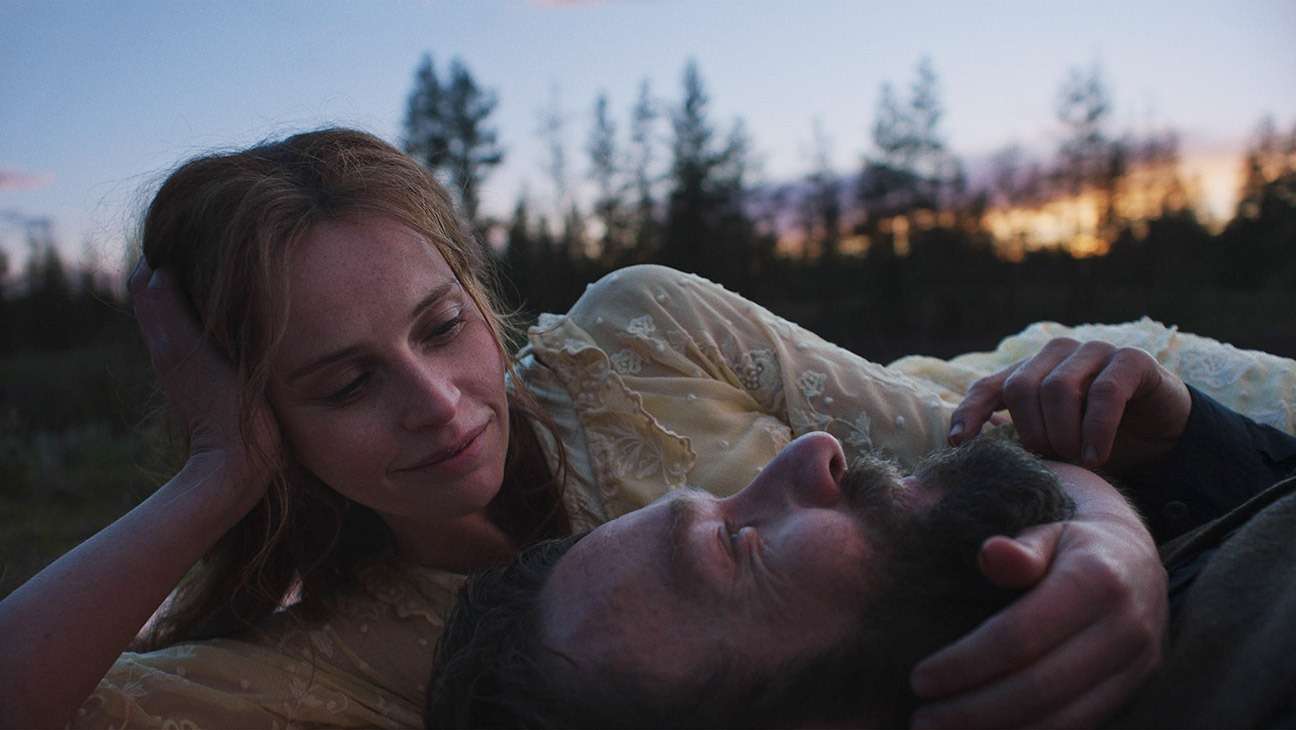
Clint Bentley’s Train Dreams, adapted from Denis Johnson’s 2011 novella, is one of those rare literary-to-film transitions that feels both delicate and vast—an intimate portrait delivered on an epic historical canvas. With Bentley co-writing alongside Greg Kwedar, the film becomes a sweeping yet deeply personal American drama, following nearly eight decades in the life of Robert Grainier, played with quiet brilliance by Joel Edgerton. Rather than striving for conventional narrative momentum, Train Dreams builds its emotional power through atmosphere, memory, and the haunting sense of time’s unstoppable forward motion. The result is a film that lingers, aches, and ultimately soars.
From its opening scenes, Bentley sets a tone of restrained melancholy. Grainier’s arrival in rural Idaho as an orphaned boy immediately establishes him as a solitary figure shaped by landscape as much as by circumstance. As he grows into adulthood, Edgerton embodies the character with a soft-spoken sincerity that never slips into sentimentality. His Robert is a person who experiences life most vividly in fleeting moments—sunlight across forest canopies, the strength of a railroad beam beneath his hands, the rare comfort of companionship—and the film’s structure reflects this episodic, drifting, dreamlike existence.
Rather than forcing the disparate threads of Grainier’s life into rigid narrative shape, Bentley allows them to accumulate organically, forming a portrait with the texture and emotional nuance of a lived life. It is an ambitious choice, but one that pays off as the film reveals its power slowly, patiently, and with a keen sense of what makes a life resonant.
The film’s conclusion, centered around a moment of literal and emotional elevation, is beautifully conceived. Bentley refrains from overstating its significance, allowing imagery and narration to convey a quiet culmination of everything Grainier has lived—his losses, his brief joys, his longing for unseen connections, and his momentary sense of unity with the world.
If Train Dreams has a limitation, it lies in its intensely meditative pacing, which may challenge viewers expecting a traditionally structured drama. Its fragmented storytelling demands reflection and patience. Yet for those willing to settle into its rhythm, the film offers a rich emotional experience that rewards attentiveness.
10. Predator: Badlands

Dan Trachtenberg’s Predator: Badlands isn’t just a sequel — it’s a seismic leap forward for one of cinema’s most enduring science fiction sagas. Following the success of his stripped-down prequel Prey (2022), Trachtenberg once again demonstrates his mastery of world-building and tension, but this time with a grander, more mythic scope. The result is an electrifying, soulful, and visually staggering addition to the Predator canon that combines visceral creature action with a surprisingly affecting emotional arc. It’s not just the best Predator film; it may very well redefine what this franchise can be.
The film’s premise, centered on Dek, a young and “runt” Predator exiled to prove himself on the savage planet Genna, sounds straightforward enough — a lone hunter facing impossible odds to claim honor. Yet Trachtenberg and his creative team infuse this premise with astonishing nuance and world-building depth. Badlands feels like the first Predator film to truly explore Yautja culture beyond the thrill of the hunt. It transforms their mythos into something both primal and poetic, giving audiences a story that is as much about survival and identity as it is about dominance and warfare.
Dimitrius Schuster-Koloamatangi delivers a remarkable performance beneath the heavy prosthetics and motion capture as Dek, the outcast Yautja whose physical fragility becomes a mirror for emotional vulnerability. Schuster-Koloamatangi conveys a remarkable amount through physicality — subtle head tilts, measured breathing, and expressive movements — turning what could have been a purely monstrous role into a profoundly empathetic one. Dek’s journey from disgrace to defiant warrior unfolds with Shakespearean resonance, driven by a yearning for belonging and justice that feels wholly new for this franchise.
Elle Fanning is equally mesmerizing in dual roles as Thia and Tessa, two Weyland-Yutani synthetics whose divergent philosophies reflect the duality of humanity and artificiality. As Thia, Fanning brings warmth and sorrow to a character literally pieced back together, while her portrayal of Tessa radiates cold authority and corporate precision. Watching the two clash — emotionally, intellectually, and physically — is one of the film’s most rewarding dynamics. Through Thia, Badlands adds an unexpected tenderness to its brutal universe. Her partnership with Dek evolves into something strangely beautiful — not romantic, but symbiotic, grounded in mutual loss and resilience.
By its conclusion, Predator: Badlands stands as a work of thrilling reinvention — brutal yet soulful, ambitious yet grounded. It expands the series’ mythology while deepening its emotional resonance, proving that longevity doesn’t mean stagnation. The Predator franchise has rarely felt this alive, this dangerous, or this human.
Predator: Badlands is a ferocious, visually dazzling, and emotionally charged sci-fi epic that propels the franchise into uncharted territory. Fueled by Dan Trachtenberg’s visionary direction and standout performances from Elle Fanning and Dimitrius Schuster-Koloamatangi, it’s both a haunting odyssey of redemption and a masterclass in cinematic world-building.
9. Zootopia 2
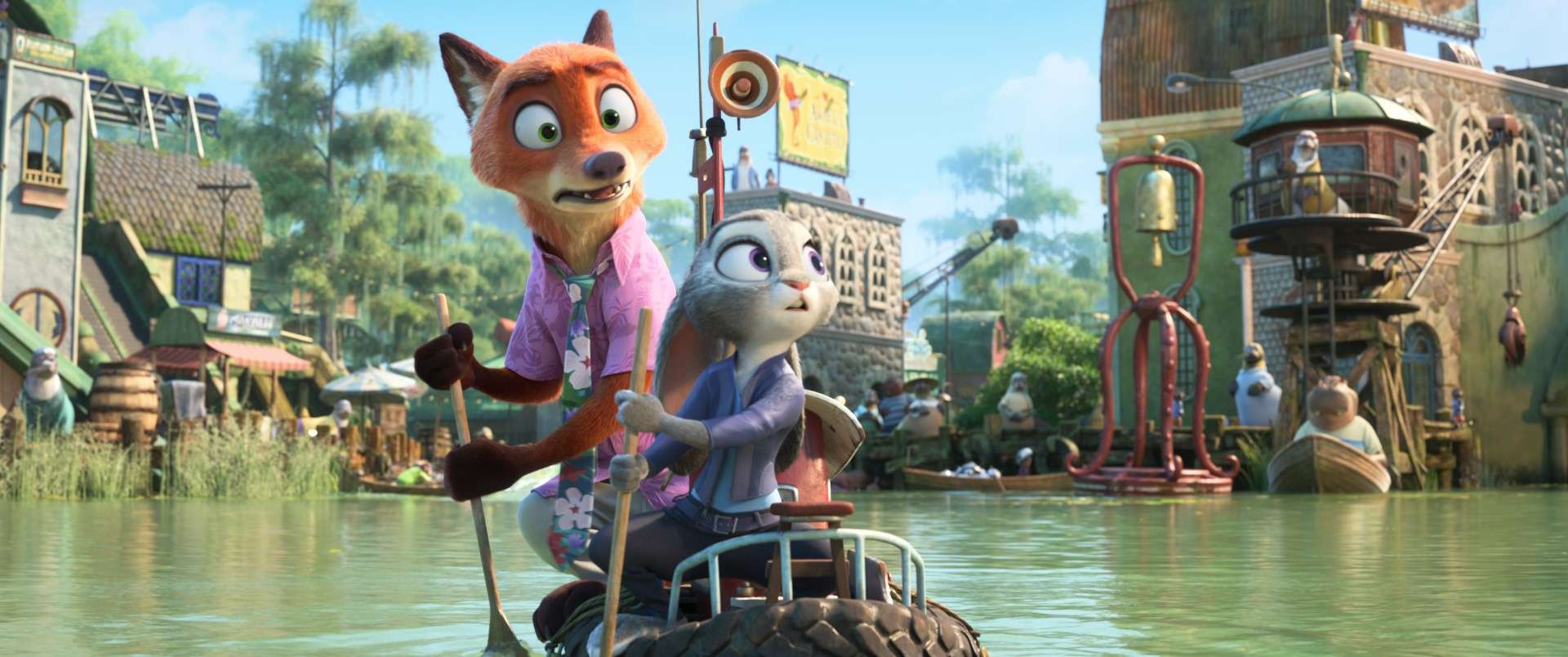
Nine years after its predecessor became a modern animated classic, Zootopia 2 is a sequel that feels both lovingly familiar and daringly expansive. Produced by Walt Disney Animation Studios and directed by Jared Bush and Byron Howard, this animated buddy-cop comedy doesn’t simply revisit the bustling mammal metropolis for nostalgia’s sake—it deepens the original’s emotional and thematic ambitions in ways that are frequently moving, often funny, and occasionally devastating. With Ginnifer Goodwin and Jason Bateman returning in top form, and a roster of inspired new voices led by Ke Huy Quan, the sequel proves that Zootopia still has plenty of heart—and plenty to say.
Picking up shortly after the events of 2016’s Zootopia, the story reunites us with Officer Judy Hopps and Officer Nick Wilde as newly minted full-time partners in the Zootopia Police Department. While the original film was about proving that anyone can be anything, this sequel is more interested in what happens after the dream is achieved—when personalities clash, emotional baggage surfaces, and the reality of working side by side begins to test even the strongest bonds. That shift in focus gives Zootopia 2 a more mature, introspective tone without sacrificing the vibrant comedy and adventurous energy fans expect.
The inciting mystery revolves around the emergence of a mysterious reptilian figure connected to Zootopia’s hidden past, pulling Judy and Nick into a citywide conspiracy that stretches back to the very founding of the metropolis. The film cleverly expands the world by introducing new districts, forgotten histories, and marginalized communities that were literally built over. Even while keeping its narrative family-friendly, the sequel tackles ideas of historical erasure, systemic injustice, and the cost of protecting a convenient myth. It’s impressive how naturally these heavy concepts are folded into what remains a fast-moving animated crime caper.
The action sequences are finely paced and consistently inventive, merging slapstick comedy with genuine suspense. The filmmakers never lose sight of spatial clarity, ensuring that the audience always understands where characters are in relation to the danger around them—an increasingly rare achievement in modern animated spectacle. Just as important, these sequences often carry emotional consequences rather than existing purely for visual thrill, reinforcing the film’s commitment to blending heart with adrenaline.
With its lush animation, layered performances, smart social commentary, and genuinely moving emotional arcs, Zootopia 2 stands as one of the strongest animated sequels Disney has ever produced. It is funny, thrilling, thoughtful, and often achingly heartfelt. By the time the final moments play out, the film leaves you not only exhilarated by the adventure, but touched by the quiet truths it reveals about trust, forgiveness, and connection. It’s a richly emotional, visually dazzling, and remarkably mature continuation that proves Zootopia still has extraordinary stories left to tell.
8. The Life of Chuck

Mike Flanagan’s The Life of Chuck is not your typical science fiction drama. Based on Stephen King’s quietly profound novella from If It Bleeds, the film unfolds in reverse chronology, peeling back the life of one man from death to childhood as if tracing footprints back to their source. The result is an introspective, emotionally resonant experience—a lyrical meditation on existence, memory, and personal impact that showcases Flanagan’s most mature and humane storytelling to date.
Starring Tom Hiddleston in a career-best performance as Charles “Chuck” Krantz, the film is structured into three acts: “Thanks, Chuck,” “Buskers Forever,” and “I Contain Multitudes.” Each section offers a window into Chuck’s life, beginning at the end of the universe and ending with his childhood revelations. Though the narrative may appear fragmented at first glance, it ultimately forms a beautiful mosaic—one that affirms the quiet power of a single human life.
In the first act (titled “Thanks, Chuck,” though chronologically the final chapter of Chuck’s life), Flanagan anchors the existential with the personal. Through the eyes of high school teacher Marty (Chiwetel Ejiofor) and his ex-wife Felicia (Karen Gillan), we watch the surreal unraveling of reality: internet outages, vanishing stars, inexplicable billboards thanking someone named Chuck for “39 Great Years.” But instead of leaning into apocalyptic spectacle, Flanagan turns inward, focusing on human connections in the face of cosmic unraveling. This section works as a spiritual cousin to Lars von Trier’s Melancholia, though less despairing and more affectionate—resigned to the end, but with a grateful heart.
Tom Hiddleston brings pathos and nuance to Chuck’s final moments, which are rendered with aching grace. The film’s science fiction elements never overpower the humanity of the piece. Rather than world-ending CGI or bombast, we get dimming lights, hushed conversations, and the warmth of a hand held. Flanagan’s minimalist aesthetic—long takes, warm lighting, and purposeful silences—elevates the emotion without manipulation.
The reverse chronology could have come off as gimmicky in lesser hands, but Flanagan uses it to build thematic richness. As we move further from death and closer to innocence, the film paradoxically feels heavier, as each prior moment retroactively colors what we already know of Chuck’s fate. It’s a brilliant structure that forces us to reconsider cause and effect, not just in plot but in emotional resonance. Rather than constructing suspense in a traditional way, Flanagan constructs poignancy.
The Life of Chuck is a profound, humanistic work—more soulful than sci-fi, more meditative than dramatic, and one of the most quietly powerful adaptations of Stephen King’s work ever made. Mike Flanagan has crafted a film that doesn’t need monsters or mayhem to haunt you. Instead, it lingers because of its emotional insight, its poetic storytelling, and its faith in the meaning found within each life, no matter how small or ordinary.
7. Wake Up Dead Man: A Knives Out Mystery

With Wake Up Dead Man: A Knives Out Mystery, writer-director Rian Johnson delivers a gripping, spiritually charged reinvention of the modern whodunit—one that deepens the emotional and thematic ambitions of his already celebrated franchise. As the third installment following Knives Out and Glass Onion, the film does something rare for a blockbuster mystery series: it meaningfully evolves its tone, its stakes, and its worldview without sacrificing the puzzle-box pleasure that made it so popular to begin with. The result is a near-flawless blend of gothic atmosphere, moral inquiry, and razor-sharp entertainment—a film that earns its praise not through spectacle alone, but through craft, confidence, and surprising emotional gravity.
Reprising his role as the singularly observant Southern sleuth, Daniel Craig gives his most shaded performance as Benoit Blanc to date. Here, Blanc is less the flamboyant raconteur of past entries and more a quietly probing presence, a man searching not only for truth but for grace within a morally wounded community. Craig’s performance is slyly humorous, as always, but it carries a new weight—his pauses linger longer, his eyes register doubt more often, and his empathy feels hard-earned. This tonal recalibration is key to why Wake Up Dead Man feels so distinct within the franchise while remaining fully recognizable.
The film’s setting, a remote, decaying church community steeped in resentment, secrets, and buried history, marks a dramatic shift from the opulent estates and billionaire playgrounds of earlier entries. Johnson leans into a Southern Gothic mood, favoring shadows, candlelight, stormy skies, and creaking architecture over sun-drenched luxury. The cinematography frames faith and corruption within the same narrow beams of light, creating an atmosphere where every character seems haunted by something unseen. It’s the most visually textured Knives Out film yet, and it perfectly complements the story’s darker philosophical concerns.
Josh O’Connor anchors the ensemble as the deeply conflicted Reverend Jud Duplenticy, a role that requires both vulnerability and suppressed fury. O’Connor brings remarkable nuance, portraying a man wrestling with guilt, redemption, and the suffocating weight of other people’s projected sins. His performance is quietly devastating, especially in moments where silence communicates more than dialogue could. The film smartly positions him not merely as a suspect within a mystery but as an emotional axis around which the entire narrative turns. His spiritual crisis becomes inseparable from the criminal one, and that fusion gives the story an uncommon depth.
As a standalone sequel to Glass Onion, the film works beautifully for newcomers, requiring no prior investment to be fully engaging. Yet for longtime fans, it offers a fascinating evolution of the series’ philosophical spine. Where earlier films criticized wealth, ego, and performative morality, Wake Up Dead Man turns its gaze toward spiritual hypocrisy, communal complicity, and the seductive danger of believing one’s own narrative of righteousness.
In the end, Wake Up Dead Man: A Knives Out Mystery stands as the most audacious and emotionally resonant film in the franchise. It proves that the modern whodunit can be more than a clever clockwork toy—it can also be a vessel for serious inquiry into how we judge one another and ourselves. With commanding performances, a flawlessly constructed mystery, and a thematic richness rare in the genre, Rian Johnson has crafted not only a thrilling detective story but a film of rare moral and artistic confidence. This is a mystery that lingers in the mind long after the final reveal, haunting, questioning, and quietly illuminating.
6. Black Phone 2

(from left) Finn (Mason Thames) and The Grabber (Ethan Hawke) in Black Phone 2, written and directed by Scott Derrickson.
Scott Derrickson’s Black Phone 2 is not just a sequel—it’s a resurrection. Four years after the chilling original became one of Blumhouse’s most celebrated supernatural thrillers, this follow-up delivers something far rarer: a continuation that feels both inevitable and transformative. The film deepens the mythology of the first while expanding its emotional range into something far more operatic and tragic. It’s a stunning work of horror craftsmanship—brimming with raw emotion, unforgettable imagery, and a career-defining performance from Madeleine McGraw.
Set in 1982, the film picks up with Gwen Blake (McGraw) as she begins to experience vivid, terrifying dreams tied to a series of murders that took place at Alpine Lake Camp decades earlier. These aren’t just nightmares—they’re psychic transmissions from her late mother, whose own spiritual connection shaped the events of the first film. Together with her brother Finney (Mason Thames) and Robin Arellano’s brother Ernesto (Miguel Mora), Gwen sets out to uncover the truth buried in the snow-covered remnants of the camp.
What follows is a brilliantly woven supernatural mystery that shifts effortlessly between grounded emotional drama and pure nightmarish terror. Derrickson and co-writer C. Robert Cargill smartly avoid repetition; Black Phone 2 isn’t about another kidnapping or another killer. Instead, it’s about legacy—how evil lingers and how trauma echoes across generations. The story’s structure, balancing Gwen’s dream sequences with the claustrophobic dread of being trapped in a blizzard, lends the film an unsettling rhythm that feels like slipping between sleep and waking life.
If the first Black Phone announced Mason Thames as a breakout, its sequel belongs entirely to Madeleine McGraw. As Gwen, she commands the screen with a depth and intensity that’s nothing short of staggering. Her performance is the emotional and spiritual engine of the film—she’s no longer the precocious little sister but a young woman grappling with inherited trauma and supernatural responsibility.
McGraw’s acting here feels almost supernatural itself; she moves between ferocity and fragility with seamless precision. Her portrayal of fear is not wide-eyed or theatrical—it’s internalized, coiled, ready to explode. When she’s channeling her dreams or facing forces beyond comprehension, McGraw radiates authenticity. You believe every tear, every shiver, every defiant moment of strength.
There’s one extended sequence—a dialogue between Gwen and her mother within a surreal dream—that is simply extraordinary. Without delving into spoilers, it’s a moment that transcends genre, tapping into pure emotional catharsis. If there’s any justice, McGraw should be mentioned in the same breath as Toni Collette in Hereditary or Florence Pugh in Midsommar. It’s an Oscar-worthy performance that turns a supernatural thriller into something profoundly human.
Black Phone 2 is a remarkable achievement—a sequel that surpasses its predecessor not through excess, but through depth. Derrickson and Cargill craft a film that is simultaneously terrifying, mystical, and profoundly moving. Every element—from McGraw’s transcendent performance to Ekberg’s poetic visuals and Atticus Derrickson’s hypnotic score—works in harmony to create a complete emotional experience.
5. Frankenstein
If there was anybody who could make an absolutely electric and thrilling Frankenstein reimagining, it was Guillermo Del Toro, and boy did he ever deliver. His long-awaited film has finally arrived, and it is everything one might expect from a filmmaker whose visual and emotional language has long been steeped in the macabre, the melancholic, and the magnificent. Both grand and deeply human, del Toro’s Frankenstein is a breathtaking gothic epic that marries spectacle with sorrow, bringing Mary Shelley’s timeless tale of creation and consequence vividly to life with visual artistry, emotional resonance, and an ensemble of extraordinary performances.
With Oscar Isaac as the obsessive Baron Victor Frankenstein and Jacob Elordi as his tragic creation, del Toro crafts an operatic vision of the classic novel that feels both faithful and fearlessly reimagined. It is a film of sweeping scope and aching intimacy — a story of ambition, grief, and the agony of existence that lingers long after the credits fade.
From its opening moments amid the frozen wasteland of the Arctic, Frankenstein declares itself a work of grandeur and melancholy. Cinematographer Dan Laustsen, a longtime del Toro collaborator, bathes the film in chiaroscuro splendor — icy blues and pallid whites give way to candlelit golds and shadowy reds, as the story oscillates between scientific ambition and emotional ruin. The film’s design evokes the great gothic traditions: crumbling towers, flickering laboratories, and storm-lashed graveyards. Yet within its lavishness lies an unrelenting sadness.
Del Toro’s direction is characteristically meticulous — every frame feels hand-crafted, like an illuminated manuscript of madness and mourning. But what elevates this Frankenstein above previous iterations is its empathy. While the spectacle of reanimation remains, del Toro’s fascination lies not in the act of creation but in the pain that follows. His version of Victor Frankenstein is no mere mad scientist; he is a wounded visionary, shaped by loss and arrogance, blinded by the illusion of godhood. His Creature, by contrast, is a being of innocence and anguish, cursed to feel too much and belong nowhere.
Mia Goth, as Elizabeth Harlander, gives the film its moral and emotional counterpoint. Far from a passive love interest, she is the conscience of the story — compassionate, intelligent, and unafraid to challenge Victor’s cruelty. Goth’s ethereal presence carries both tenderness and quiet strength, grounding the narrative’s grand tragedy in moments of fragile intimacy.
Frankenstein is not just another adaptation of Mary Shelley’s novel; it’s a resurrection of its soul. With its haunting performances, sumptuous design, and emotional intelligence, the film cements Guillermo del Toro as one of cinema’s great mythmakers — a creator who understands that monsters, in the end, are mirrors of ourselves. It’s a visually stunning, emotionally shattering epic that redefines the legend for a new generation.
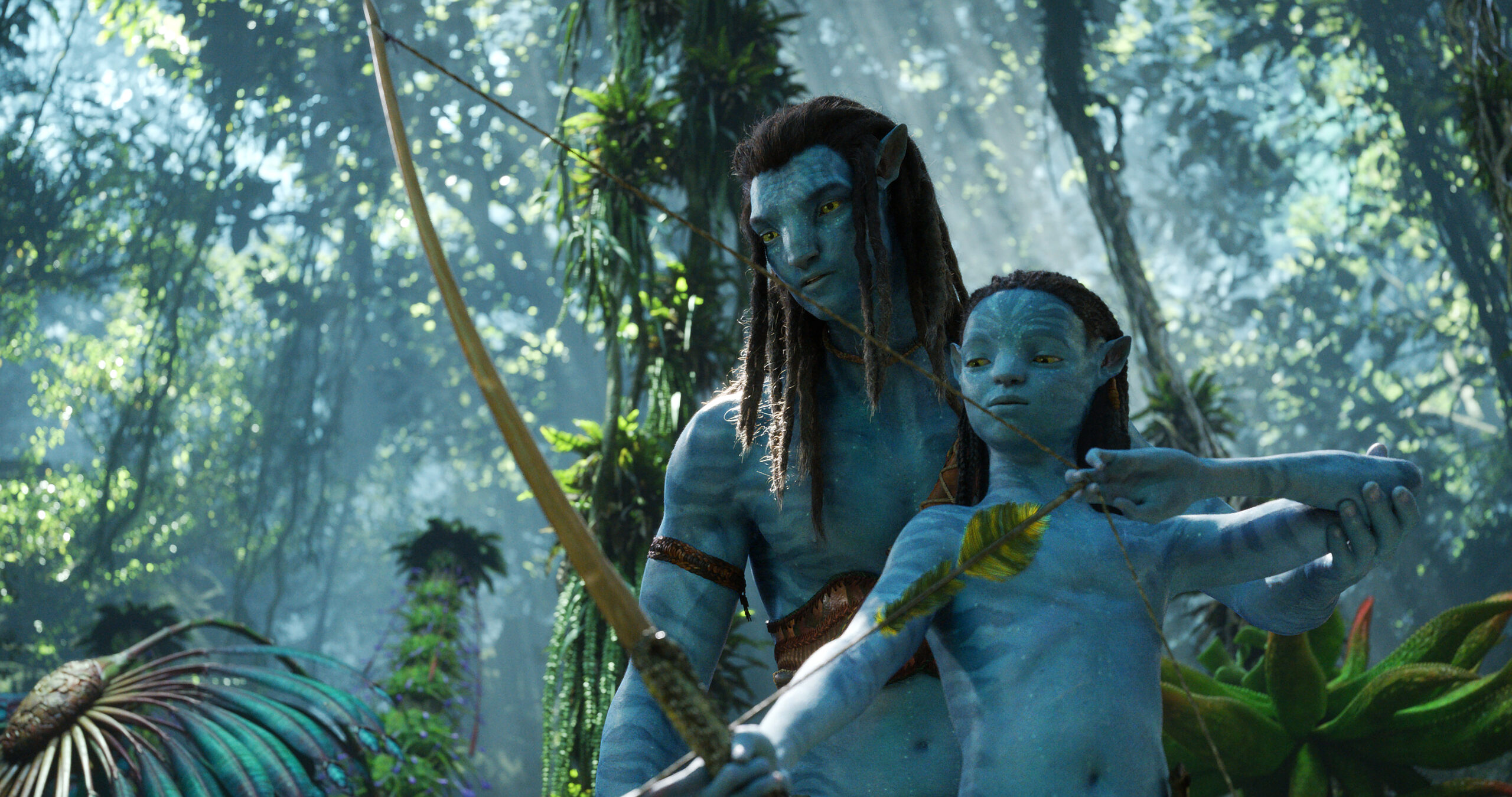
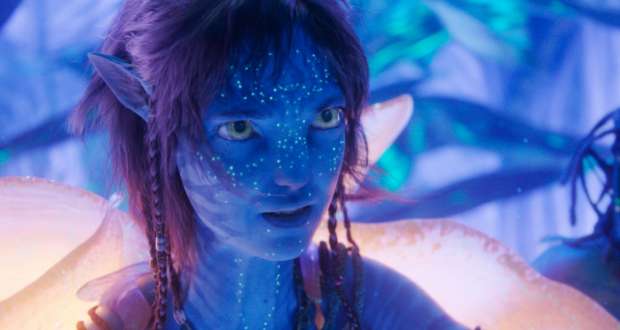
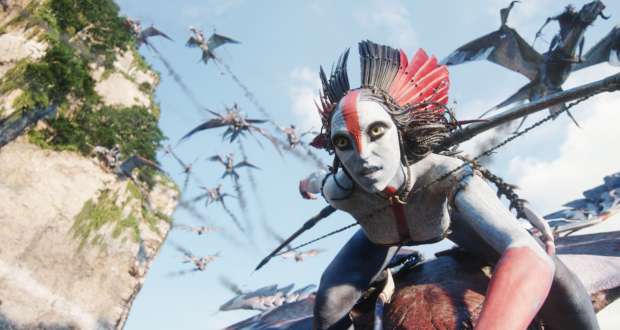
4. Avatar: Fire and Ash
With Avatar: Fire and Ash, James Cameron delivers not only the most emotionally ferocious chapter of the Avatar saga so far, but also its most thematically ambitious. Expanding the mythos of Pandora while deepening its characters and moral conflicts, Fire and Ash stands as a towering achievement in epic science fiction filmmaking. This is a sequel that refuses to coast on spectacle alone, instead forging a bold, often devastating meditation on grief, faith, colonialism, and spiritual evolution. The result is a rare blockbuster that feels both colossal and intimate.
Picking up after the events of Avatar: The Way of Water, the film places Jake Sully and his family in a fragile emotional state. Loss hangs heavily over the narrative, shaping every decision and fueling every conflict, yet Cameron wisely avoids turning the film into a somber dirge. Instead, grief becomes the catalyst for transformation. Characters respond to trauma in wildly different ways—some with rage, others with introspection, and still others with dangerous ambition. This emotional fragmentation gives Fire and Ash its driving tension, allowing the story to feel personal even as it sprawls across continents, oceans, and skies.
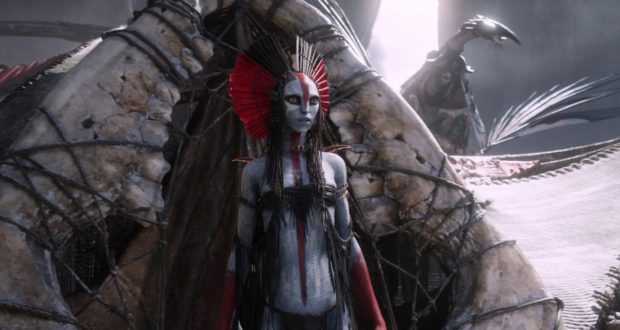
What truly distinguishes this installment is its introduction of new cultures within Pandora. The Mangkwan—often referred to as the Ash People—are among the most striking additions to the franchise. Their volcanic environments, scorched aesthetics, and militant worldview provide a sharp counterpoint to the lush blues and greens audiences associate with Pandora. Cameron and his collaborators never reduce them to simple antagonists; instead, they are portrayed as a people shaped by scarcity, fire, and survival. Their philosophy clashes violently with the spiritual harmony of Eywa, creating one of the richest ideological conflicts the series has explored.
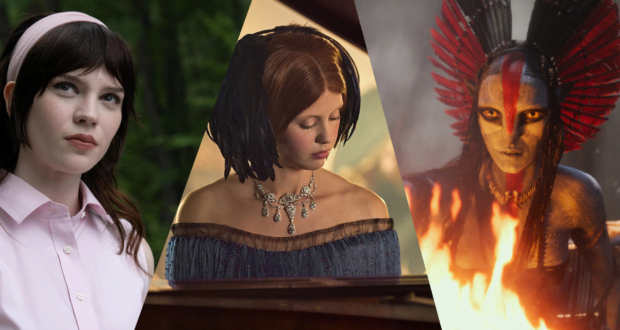
This is where Varang emerges as one of the film’s most compelling figures—and unequivocally one of my favorite characters. Portrayed with commanding intensity by Oona Chaplin, Varang is neither villain nor hero in the traditional sense. She is a leader forged by hardship, whose pragmatism and fury feel tragically understandable. Every scene featuring her crackles with menace and intelligence, and the film wisely allows her agency to exist independently of human interference. Varang represents what Pandora could become if balance is replaced by domination, making her presence feel thematically essential rather than narratively convenient.
Equally captivating is Kiri, once again played with astonishing sensitivity by Sigourney Weaver. Kiri’s arc is the spiritual backbone of Fire and Ash, pushing the series deeper into metaphysical territory. Her connection to Eywa evolves in ways that are awe-inspiring, unsettling, and profoundly moving. Kiri embodies the idea that Pandora itself is changing, adapting to the existential threats it faces. She is my other favorite character in the film, not just because of her power, but because of her empathy. Where others react with violence, Kiri responds with understanding—sometimes to terrifying effect.
By the time the credits roll, Avatar: Fire and Ash feels less like a sequel and more like a turning point. It reshapes the emotional and philosophical landscape of the series, setting the stage for future chapters while standing firmly on its own. Anchored by unforgettable characters—especially Kiri and Varang—this is blockbuster filmmaking with purpose, passion, and vision.
James Cameron has once again proven that when he returns to Pandora, it is not simply to entertain, but to challenge, provoke, and inspire. Avatar: Fire and Ash burns brighter than any entry before it—and leaves an indelible mark on the soul of the franchise.
3. The Long Walk
Francis Lawrence’s The Long Walk, adapted from Stephen King’s 1979 novel (originally published under his Richard Bachman pseudonym), is an unflinching, devastatingly effective dystopian thriller that lingers in the mind long after the credits roll. Working from a screenplay by JT Mollner, Lawrence crafts a story that transcends its bleak survival premise and evolves into a searing character study about endurance, morality, and what it means to remain human in a world designed to strip away compassion. With a powerhouse cast of young actors and a tone that marries spectacle with harrowing intimacy, this film stands as one of the most faithful and haunting King adaptations to date.
Unlike many post-apocalyptic thrillers that rely on explosions and large-scale destruction, The Long Walk places its focus on a singular, cruelly simple concept: keep moving, or die. This stripped-down conceit is the bedrock of the story, and Lawrence leans into its austerity to chilling effect.
The America depicted here is not so much ruined as it is regimented. A totalitarian regime controls its people through fear and spectacle, and the annual Long Walk contest serves as both punishment and entertainment. The world-building is subtle but potent; we are never drowned in exposition, yet every soldier’s rifle, every roaring crowd, and every glimpse of authority communicates volumes about the state’s iron grip. Lawrence’s vision of this dystopia feels disturbingly plausible, making the contest not just a survival game, but a reflection of authoritarian cruelty masquerading as public ritual.
Cooper Hoffman as Raymond Garraty delivers a turn brimming with vulnerability and quiet resilience. Hoffman portrays Garraty not as a hardened hero, but as a teenager thrust into an impossible situation, torn between survival and empathy. His performance embodies the exhaustion and fragile hope at the story’s core.
David Jonsson as Peter McVries is equally compelling. McVries emerges as the emotional counterweight to Garraty, cynical yet deeply human. Jonsson plays him with sharp wit and undercurrents of pain, crafting a character who challenges Garraty’s worldview while forming one of the most touching relationships in King’s canon.
It is a grueling, heart-wrenching exploration of endurance, morality, and the human spirit under oppressive control. Yet in its brutality lies a strange beauty: fleeting moments of connection, courage in the face of despair, and a meditation on sacrifice that lingers long after the credits.
2. Bring Her Back
In Bring Her Back, Danny and Michael Philippou (the energetic twin duo behind Talk to Me) return with a chilling and unforgettable supernatural horror experience that marries raw psychological terror with a harrowing examination of loss, guilt, and the lengths a parent might go to reclaim what’s lost. With a screenplay co-written by Danny Philippou and Bill Hinzman, this film cements the Philippou brothers as fearless visionaries in modern horror—a title they’ve more than earned with this nightmarish, atmospheric piece.
Bring Her Back is a tale of grief gone awry—a narrative that finds horror not just in the supernatural but in the human heart. The story follows Andy (Billy Barratt) and his younger, visually impaired stepsister Piper (Sora Wong) as they navigate the aftermath of trauma, having recently lost their father in a tragic accident. Placed in foster care with the seemingly compassionate Laura (Sally Hawkins), the siblings soon find themselves at the center of a sinister plot rooted in occult rituals and desperate attempts to resurrect Laura’s deceased daughter.
From the film’s chilling cold open—a disturbing glimpse into a cult’s ritualistic practices—to its final, jaw-dropping moments, the Philippou brothers demonstrate a masterful grasp of tension and dread. Atmosphere saturates the film: the constant sense of something lurking just beyond the frame, the near-unbearable anxiety as the characters unravel, and the way dread seeps through every shadow and silence.
The direction feels precise yet feverish, with cinematographer Aaron McLisky capturing the claustrophobic interiors of Laura’s home with a grim, decaying beauty. Every hallway, every dimly lit corner feels like a character in itself—an extension of Laura’s fractured psyche and the lurking horrors waiting to pounce. The use of handheld shots in key moments lends the film an urgent, documentary-like feel that places the viewer in the center of the chaos, while judicious long takes stretch the tension to nearly unbearable levels.
Sally Hawkins is devastatingly good as Laura—a foster mother whose grief curdles into something monstrous. Hawkins brings an unsettling complexity to the role; her Laura is at once heartbreakingly vulnerable and deeply menacing, oscillating between maternal warmth and terrifying fanaticism. The script wisely avoids turning her into a cartoonish villain; instead, it portrays her as a mother so consumed by loss that she’s willing to cross any boundary to fill the void left by her daughter’s death. Hawkins’ performance is the film’s emotional linchpin, grounding even the most surreal and horrific moments in a deeply human pain.
Billy Barratt, as Andy, delivers a raw and compelling performance that anchors the film’s emotional core. He captures Andy’s resentment, fear, and reluctant protectiveness with remarkable nuance, especially in his interactions with Piper. Sora Wong, meanwhile, is excellent as Piper, lending the character an affecting vulnerability that makes her plight all the more heartbreaking. Her portrayal of a visually impaired child feels authentic and respectfully rendered, never exploitative.
Bring Her Back is a triumph of modern horror—a film that refuses to choose between psychological depth and unflinching terror, and instead delivers both in equal measure. It’s a searing, nightmarish journey into the darkness of grief, obsession, and the fragile ties that bind us to the living and the dead. Danny and Michael Philippou prove they are among the genre’s most exciting voices, crafting a horror film that not only shocks and terrifies but also moves and devastates.
1. Companion
Some films in the science fiction horror genre lean heavily on their high-concept premise, while others focus on humor or character-driven thrills. Companion, the latest genre-bending offering from writer-director Drew Hancock, masterfully blends all these elements, delivering a film that is equal parts darkly comedic, terrifying, and emotionally engaging. With a stellar cast led by Sophie Thatcher and Jack Quaid, and produced by Zach Cregger (Barbarian), Companion is an electrifying ride that subverts expectations at every turn.
From the outset, Companion presents itself as a familiar horror setup: a group of friends heads to an isolated cabin for a weekend getaway, and things inevitably take a turn for the worse. However, Hancock quickly reveals that this is far from a conventional slasher or home invasion thriller. Instead, Companion unfolds like a twisted psychological game, where hidden agendas—and advanced technology—manipulate loyalty and trust.
The film’s protagonist, Iris (Sophie Thatcher), is introduced as an intelligent but seemingly ordinary young woman, excited to reunite with her boyfriend Josh (Jack Quaid) and their friends Kat (Megan Suri), Eli (Harvey Guillén), and Patrick (Lukas Gage). Their host, Sergey, played by Rupert Friend, is an enigmatic figure with wealth and influence, adding an underlying tension to the group’s dynamic. But when an act of violence sets off a chain reaction of deception and paranoia, the film takes an exhilarating left turn, throwing the audience into a gripping narrative about control, free will, and the nature of identity itself.
The genius of Companion lies in its seamless integration of horror, science fiction, and biting social commentary. The revelation that Iris is actually a highly advanced companion robot gut-punches viewers and redefines the film’s entire trajectory. Hancock takes this premise and runs with it, exploring the ethical dilemmas of AI autonomy and the dark impulses of those who seek to exploit it.
Sophie Thatcher, fresh off her success in Yellowjackets and Heretic, delivers a career-defining performance as Iris. She masterfully conveys the nuances of a character grappling with artificial limitations while striving for genuine agency. Her transformation from an unassuming companion into a force of nature is both compelling and deeply satisfying. Thatcher’s performance ensures that Iris never feels like a mere machine; instead, she is a character brimming with emotional complexity, intelligence, and even humor.
One of Companion’s greatest strengths is its tonal balance. Hancock crafts a film that is genuinely terrifying in moments of intense suspense, yet effortlessly funny when it wants to be. The humor never undercuts the horror; instead, it enhances the experience, making the film feel refreshingly original in a genre that often leans too heavily in one direction. The dark comedic elements, particularly in Josh’s delusions of grandeur and the film’s commentary on human arrogance, provide a satirical edge reminiscent of The Cabin in the Woods or Barbarian.
Drew Hancock’s Companion is a triumphant blend of horror, science fiction, and dark comedy, delivering a film that is as intellectually engaging as it is wildly entertaining. With a razor-sharp script, stellar performances—especially from Sophie Thatcher—and a deeply original take on AI horror, Companion stands as one of the most exciting and thought-provoking films in recent memory.