Storytelling relies on settings as much as its characters. From Aristotle’s play structure to modern-day cinema, locations have held their own special place in visual storytelling. Cinema is no exception. It has never truly underestimated the strength held by the backdrops of narratives. Cities, additionally, are a melting pot of history, social interactions, and cultural fusions. When exposed to a protagonist’s central space, they become more than just a place of action. It becomes the very action and the characters who are committing those actions. On that note, here are ten amazing films where the city takes over the plot.
1. Chungking Express (Hong Kong)

Wong Kar-Wai’s 1994 film depicts urban alienation like no other. The original Chinese title of the film, Chun Hing Sam Lam, translates to “Chungking Jungle”. Two city cops experience love and loss amidst the chaos of Hong Kong’s socioeconomic landscape. Capitalism persists like smoke and, when stroked not-so-gently, paves the way for emotional stability. Be it a can of Pineapples for Cop 223 or a small apartment for Cop 663, the commodified experience entraps the very gist of life in a big city.
The labyrinth of the streets and Chungking Mansions in Hong Kong become a direct analogy to the core theme of depressive yearning. Wong Kar-Wai’s impressive signature visual techniques like step-printing create a dream-like charm to encapsulate the peak city experience. Its hustle and bustle, rush, and no-time-to-die philosophy all blend in peacefully with the characters’ psychological restraint to become a rolling stone.
2. Na Maloom Afraad (Karachi, Pakistan)

Karachi has been a place of interest for Pakistani authors and filmmakers for decades. The cosmopolitan city and the largest city of Pakistan is known as the sea of opportunities. It is also notorious for criminal alleys, and violence reigns free on the roads. These perilous tales, in some cases, are misrepresented. This is where Nabeel Qureshi stepped forward and carried on the task of portraying the city in its raw and unfiltered aesthetic in Na Maloom Afraad. Karachi becomes a site of humor and chaos alike.
The very plot of the film relies on crime, a heist turned into a fiasco. As Farhan, Shakeel, and Moon attempt to run away from cops, they’re surviving on the mercy of the coastal city. Comedy and danger fuses, achieving a balance every filmmaker wishes to achieve. The burning and violent cityscapes, though treacherous, never seem out of place but offer an insightful lens into the day-to-day life in Karachi. The comedic side of the film also gives it a tone that keeps it away from an offensive reception from the audience.
3. Midnight in Paris (Paris, France)
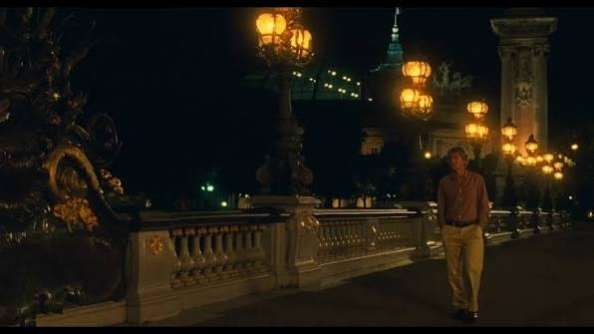
Woody Allen‘s 2011 romantic film is one of the finest works when it comes to comprehending spatiality in cinema. Paris is not just a city but an alive and throbbing unit, as Hemingway puts it, ‘a movable feast’. Gil completely dismantles the very logic of time and space and experiences present-day Paris in the daytime and the Paris of the 1920s in the night. Its magical realism truly shines alongside other postmodern takes. These include spatial plurality and intertextuality, as the protagonist is transported to meet literary legends like Gertrude Stein, F. Scott Fitzgerald, and Salvador Dalí). Every corner of the city, the rainy streets, cafes, and monuments are romanticized. Midnight in Paris truly embodies its ‘city of love’ label.
4. Slumdog Millionaire (Mumbai, India)

Danny Boyle‘s 2008 film Slumdog Millionaire is not an ordinary rags-to-riches story. It is one that thrives on the city. The Mumbai of the 90s, the transformation of Bombay, and the thugs are all relentlessly loose. The three main characters, Jamal, Latika, and Salim, are etched on the very fabric of the city slums. The events of the movie unfold as Jamal plays a game on television where he has to answer general knowledge questions to become a millionaire. Each question sheds light on a different memory, and it leads back to Mumbai. The city of dreams, in the literal sense, lifts Jamal from garbage piles and puts him to the top.
5. Spider-Man Films (Brooklyn, New York)

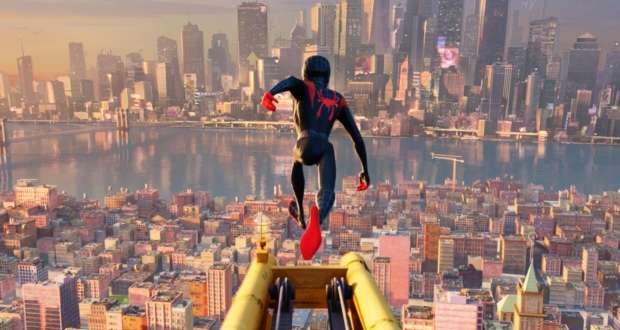
New York has been one of the most heavily-featured and inspirational cities when it comes to pop culture. While DC Comics have featured fictional cities like Gotham and Metropolis on it, Marvel made the literal city home to its most popular hero, Spider-man. Who made a better Spider-Man film will always be a topic of debate. One thing, however, that would remain valid is how brilliantly the NYC skyline is brought into these movies. The bridge, Manhattan’s skyscrapers, and brownstones all remain on an iconic display. The phrase “friendly neighborhood Spider-man” associates his identity directly to the city.
6. Perfect Days (Tokyo, Japan)

Wim Wenders’ 2023 film Perfect Days is a counter-response to Tokyo’s unfair labeling as a hyper-modern city. The film, more than anything, features a routine that exists amidst its architecture. Hirayama views his city through his ordinary sight. It also offers a discourse on Tokyo’s public restrooms, which emerged through The Tokyo Toilet project. These toilets will take him to buildings which vary a lot in infrastructure, from traditional wooden huts to modern glass houses. The film offers a beautiful commentary on how Tokyo is capable of offering a comforting life despite the rush of its crowd.
7. Sherlock Holmes (London, England)

Sherlock Holmes stands as a true historical icon of Victorian England. The stylish detective lives in London on Baker Street and solves crimes occurring in the foggy streets of the metropolis. Arthur Conan Doyle’s books did overlook a lot, if that matters. As a city of global importance, London’s slums and horrors of the growing industries were often ignored. One may argue for a selective representation to evoke mystery. Nonetheless, the dark and narrow streets of London gave birth to heinous crimes. Crimes which thoroughly presented the gruesome side of the growing cosmopolitan. London, in this way, complements Sherlock Holmes as a place of mystique and secrets.
8. Parasite (Seoul, Korea)

Bong Joon-ho‘s 2019 masterpiece, Parasite, is one of those movies which heavily relies on symbolism. The class conflict is deeply explored, and everything visible on the screen tells a story. The story revolves around two families. One of whom lives in a high modernist mansion and the other lives in a basement apartment. Both of these embody the lifestyle of Seoul. It then leans into a series of events where the lower class becomes a parasite to the upper class. Their actions stem from a psychological resistance which Korea’s changing economy instills within the many citizens who fail to advance with a similar pace. The semi-basement units dating from the Cold War era explain the bunkers, an essential plot detail.
9. La La Land (Los Angeles, California)

The musical directed by Damien Chazelle in 2016 views Los Angeles for its ravishing beauty and the magic of dreams which lingers in the air. From its opening scene onwards, we see traffic jams, abandoned theaters, and local clubs. Often criticized for its lack of center, LA is a city not romanticized enough. It is mostly known for epic shooting locations and as home to the elite. La La Land, however, fully embraces it and features it as a place for artists where dreams are in the making or breaking. Mia and Sebastian are two dreamers living in the fast-paced city. One hoping to make it big as an actress and the other a jazz artist. The LA crowd and nuisance reflects the tight rope of hope one needs to walk on to preserve their dreams.
10. Monte Carlo (Monte Carlo, Monaco)

This one may not be as critically acclaimed as the other movies on this list, but it delivers the tone just the same. Based on the novel Headhunters by Jules Bass, it centers around two sisters and their friend who decide to spend their summer in Monte Carlo. Grace Bennett finds out that she is also a doppelganger of a wealthy heiress and decides to play pretend. Three of them fall in love on their trip while having a once-in-a-lifetime experience. Monte Carlo serves as an epic destination, already a prime filming location for its beauty and splendor. Therefore, its ultra rich playground of the elite identity becomes a centerpoint of the plot. The glamor and romance becomes the very whirlpool for establishing themes like social climbing and mistaken identities. A summer trip couldn’t get more hyped than frolicking its way through casinos and French landmarks.
Let us know which one of these films you have enjoyed the most.
Happy Watching!