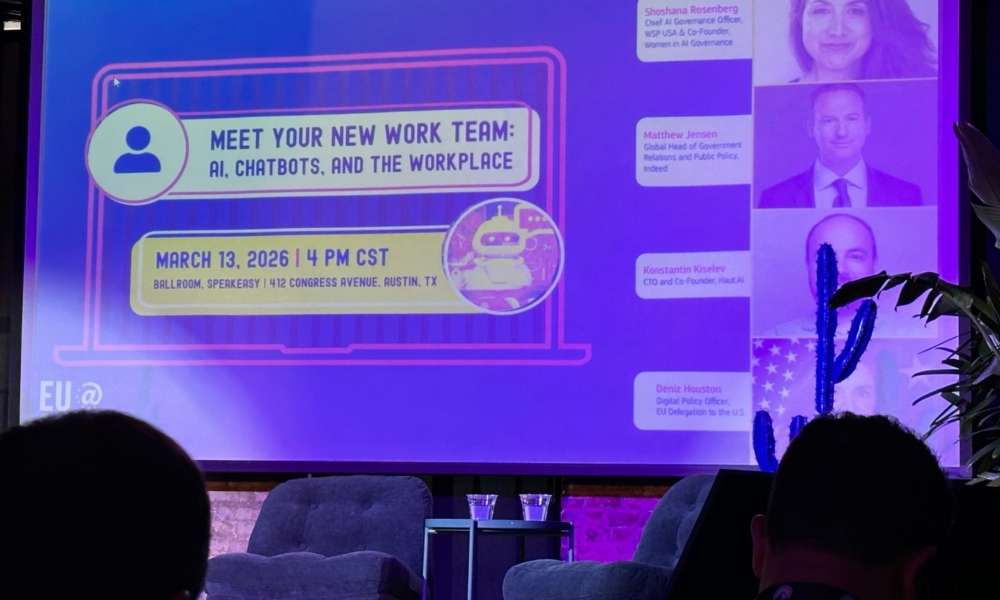

The rise of artificial intelligence has sparked plenty of debate about the future of work. One of the most pressing questions surfaced during a SXSW 2026 panel titled “Meet Your New Work Team: AI, Chatbots, and the Workplace.” As AI tools spread through offices and industries, many people are asking the same thing: is AI replacing entry level jobs?
The discussion brought together experts from companies like Indeed, Haut.AI, and WSP to examine how automation is reshaping hiring and workplace roles. While the panelists agreed that artificial intelligence is transforming the job market, they pushed back against the idea that AI will simply eliminate the next generation of workers.
Instead, the debate revealed a more complicated reality. AI may change how people start their careers, but it could also create new opportunities for younger workers who learn to use the technology effectively.
The Disappearing Junior Tasks
For decades, entry-level positions followed a familiar pattern. New employees handled repetitive tasks while learning the fundamentals of their industry. Interns gathered research. Junior analysts processed data. Assistants managed scheduling and administrative work. Many of those tasks are now being automated. AI tools can summarize reports, draft documents, analyze data, and even generate presentations.
Work that once required several junior employees can sometimes be completed in minutes with the help of software. That shift raises a serious concern. If artificial intelligence performs the tasks traditionally assigned to entry-level workers, how will young professionals gain the experience needed to move up the career ladder?
The Experience Gap
Several panelists acknowledged that this concern is legitimate. Many professions rely on early career roles to train future experts. Software engineering offers a good example. Junior developers often begin by fixing small bugs, reviewing code, and assisting senior engineers. Over time, those tasks build the intuition needed to design complex systems.
If AI handles the early steps, the training pipeline could weaken. Future experts might struggle to develop the judgment that comes from hands-on experience. Some audience members at SXSW raised this exact question. Without entry-level work, how will companies develop the next generation of leaders and specialists?
The Rise of the AI-Native Workforce

Not everyone on the panel viewed the situation as a crisis. Matthew Jensen of Indeed suggested that younger workers may actually be better positioned than many people expect. Students and early career professionals are already experimenting with AI tools in school and personal projects. By the time they enter the workforce, they may be comfortable using AI as part of their daily workflow.
That familiarity could change how early career roles look.
Instead of performing repetitive tasks manually, entry-level workers might focus on directing AI tools. They may spend less time gathering information and more time interpreting results. This approach shifts the focus from labor to reasoning. Workers who can guide AI systems and evaluate their output may become more valuable than those who simply execute routine tasks.
Why Judgment Still Matters
Despite rapid advances in artificial intelligence, panelists emphasized that human judgment remains critical. AI systems generate predictions and suggestions based on patterns in data. They can mimic reasoning, but they do not truly understand context in the way humans do.
That means professionals still need expertise to determine whether an AI-generated result makes sense. Experienced workers can spot mistakes that automated systems might miss. They understand industry standards, ethical concerns, and real-world consequences that algorithms may overlook. In that sense, AI may change the nature of entry-level work without eliminating it entirely. The challenge for younger workers will be learning both the technology and the discipline required to evaluate it.
A Different Career Starting Point
The career ladder is not disappearing, but it may look different in the AI era. Entry-level workers might spend less time performing routine tasks and more time learning how to collaborate with intelligent tools. Instead of gradually gaining technical ability through repetition, they may need to develop critical thinking skills earlier in their careers.
That shift could reshape education and workplace training programs. Companies may need new strategies to mentor younger employees and build the expertise that organizations rely on. At SXSW, the debate made one thing clear. Artificial intelligence is not simply replacing entry-level work. It is redefining what those jobs look like.
For the next generation entering the workforce, the first coworker they collaborate with may not be another employee. It may be an algorithm.