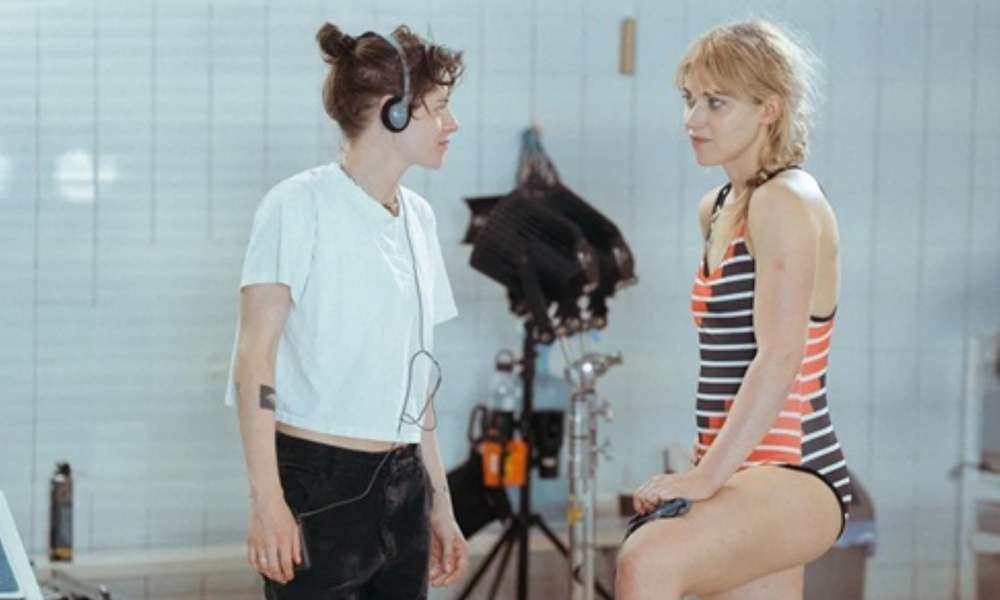

Kristen Stewart Breaks the Mold and Imogen Poots Bleeds Truth in The Chronology of Water
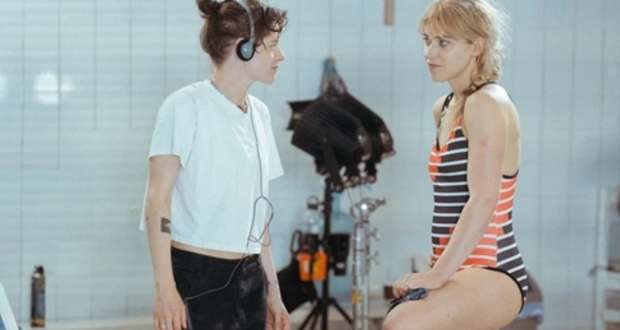
Kristen Stewart picked one of the toughest books on the shelf for her directorial debut and still showed up like she had something to prove. The Chronology of Water is not the kind of first film most actors choose. It’s messy, jagged, vulnerable, and almost too intimate for comfort. That’s exactly why Stewart went after it. And if this press conference made anything clear, it’s that she didn’t just make a movie. She cracked open a whole emotional vault and handed the contents to Imogen Poots.
This movie starts with an abusive home, follows a gifted young swimmer who crashes out of her own dreams, and then tracks the long, uneven road to becoming a writer who can finally name her pain. But Stewart’s version isn’t interested in trauma as spectacle. She’s chasing something deeper. Something about memory, identity, and how women learn to speak in rooms designed to keep them quiet.
Kristen’s take on Lidia Yuknavitch’s memoir is wild, lyrical, and sometimes even confrontational, but the energy that comes from Imogen Poots is what electrifies the whole piece. Watching her talk about the process is like watching someone describe carrying a live wire for six weeks straight. Poots never treats Lidia as a victim. She treats her as a fighter who just hasn’t figured out where to swing yet. And that’s the heartbeat of the movie.
“There’s something about not hiding that felt healing to me,” Stewart said, and that line might as well be the thesis of the entire film.
Kristen Stewart Directs Like Someone Who Finally Took the Leash Off
Stewart talked for years about wanting to direct, but she waited until she had something worth erupting over. This film sits at the intersection of raw diary pages and hallucinatory memory. It blends Super 16 grain, broken timelines, and a structure that refuses to behave. Stewart didn’t want a neat narrative. She wanted a collage of emotional truths.
Shooting on 16 millimeter was part rebellion, part philosophy. As she explained it, digital cameras give you infinite space, infinite time, infinite do overs. Stewart needed the opposite. She needed the film to breathe, scratch, and interrupt itself. She wanted the frame to feel like a memory that forgot it was supposed to behave.
She describes the movie like it’s a fossil someone dug up from an attic. And that checks out. This isn’t a timeline. It’s a scrapbook. A haunted one.
“I didn’t want to record this film. I wanted to take a lot of pictures and then splice the ones that felt emotionally true,” she said.
That philosophy makes the film feel personal even before the first cut.
Imogen Poots Went All In and Never Looked Back
Poots has always been a respected performer, but this film requires a level of exposure most actors would politely back away from. Not her. She said yes before she even finished the pitch. The material scared her, and that was the draw.
The Chronology of Water asks its lead to play a woman who sabotages herself the moment life starts getting better. Someone with a ferocious appetite for living but no roadmap for how to survive the worst parts. Poots makes Lidia alive in every frame, even the still ones where she barely speaks.
“Vulnerabilities and inconsistencies are the most interesting thing about anyone,” she said, and that alone tells you why Kristen cast her.
The film is full of moments where Poots is required to stand completely still while the camera stares right into her face. No dialogue. No tricks. Just truth. Most actors hate those moments. She thrives in them.
And yes, the physicality matters too. There is swim work, stunt work, full-body acting, and long sequences where she had to emotionally unravel in real time. Poots treats this film less like a performance and more like an excavation. When she says the shoot “eviscerated” them, she means it.
Thora Birch Adds the Quiet Violence the Story Needed
Thora Birch plays Claudia, a figure who exists somewhere between memory and echo. She doesn’t talk much, but her presence hits hard. Birch approached the role like she was playing a ghost who remembers everything but rarely gets to speak.
Her strongest moment comes during a drowning scene. Birch admitted she had real anger bubbling up even though the script demanded restraint. That tension stays on her face. Kristen said she could feel it in the air. And the film is better for it.
Birch also added one of the sharpest observations at the press conference: “This was something I didn’t necessarily want to do. It was something I had to do.”
That line sums up this entire production. Nobody here did the easy version of anything.
A Story About Pain That Still Finds Room for Hope
One of the most powerful threads running through both the film and the press conference is the idea that art can pull you out of yourself. Not instantly. Not neatly. But enough to lift your head above the water.
Stewart said the book hit her like a call to arms. She wanted to make a film that cracked open the idea of being alone. Because Lidia’s story is specific, but the emotional experience underneath it is shared by so many women who have never been given the space to name their own history.
“Alone is a fallacy,” she said. “Alone is something designed to make you feel like you have no support.”
That’s what The Chronology of Water tries to dismantle. Page by page. Frame by frame.
Why This Film Matters
There’s a reason the film got such an emotional response at Cannes. There’s a reason every audience Q and A turns into a confession booth. Stewart made a movie that doesn’t let you sit comfortably, but it refuses to let you sink.
This is not trauma for entertainment. It’s trauma for revelation. It’s not about what happened. It’s about who someone becomes after they finally admit it.
And Imogen Poots, under Kristen Stewart’s direction, delivers a performance that feels less like acting and more like a survival instinct kicking its way out of the dark.
The Chronology of Water hits limited release on December 5th. Once word gets out, this one is going to hit people in the chest.