Guillermo del Toro’s Frankenstein is not only a reinvention of Mary Shelley’s iconic tale, but a masterclass in visual storytelling. From the haunting interplay of light and shadow to the meticulous design of every garment, the film breathes life into Gothic cinema through artistry rather than spectacle. Behind the camera and the fabric are two of del Toro’s most trusted collaborators: cinematographer Dan Laustsen and costume designer Kate Hawley, both of whom helped shape the movie’s emotional and visual identity.
Cinematography as Emotion

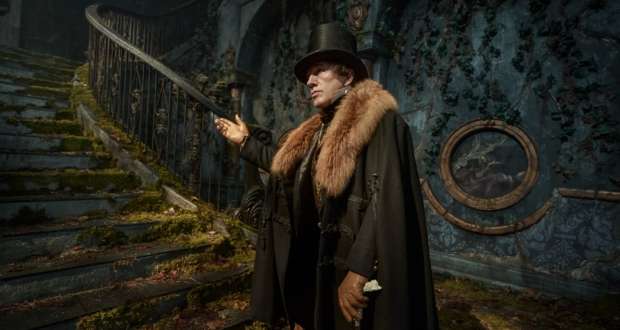
Frankenstein. Oscar Isaac as Victor Frankenstein in Frankenstein. Cr. Ken Woroner/Netflix © 2025.
Dan Laustsen, del Toro’s longtime visual partner, approaches Frankenstein with the precision of a painter. His lens captures the beauty within despair, transforming each frame into a portrait of longing and humanity.
Laustsen revealed that del Toro wanted the world of Frankenstein to feel “vivid yet timeless,” avoiding the muted tones often associated with period dramas. The result is a visual symphony of texture and light, blending the elegance of classic Hollywood with the intensity of modern horror.
The film’s contrasting environments—the fiery chaos of war-torn Europe and the stillness of candlelit interiors—mirror Victor Frankenstein’s internal struggle. Each shot reflects the tension between creation and consequence, beauty and monstrosity. Laustsen’s lighting choices give the Creature a tragic dignity, making him less a monster and more a reflection of humanity’s shadow.
Every flicker of light serves as a heartbeat for the story. When Victor stands before his creation, surrounded by the dim glow of his laboratory, Laustsen frames the moment as both birth and confession—a visual metaphor for del Toro’s belief that monsters are often the purest mirrors of the human soul.
Designing Humanity Through Fabric

FRANKENSTEIN. Mia Goth as Elizabeth in Frankenstein. Cr. Ken Woroner/Netflix © 2025.
If Laustsen paints the world with light, Kate Hawley weaves its humanity through texture. Her costume designs transform the characters’ inner lives into tangible detail, using fabric as a form of psychological storytelling.
Hawley explained that Victor Frankenstein’s wardrobe intentionally breaks from traditional Gothic expectations. Instead of somber academic attire, his look channels the spirit of a rock star—think 19th-century Mick Jagger—with velvet textures and vivid reds that symbolize obsession and desire. This design choice echoes del Toro’s interpretation of Victor as both visionary and tyrant, a man consumed by his own brilliance.
For the Creature, Hawley and del Toro collaborated closely with prosthetics designer Mike Hill to ensure that his wardrobe reflected fragility, not fear. The garments were designed to hang loosely, evoking a childlike sense of innocence. As the Creature evolves throughout the film, his clothing subtly mirrors that transformation, shifting from rough and torn materials to softer, more human fabrics.
Hawley’s work on Frankenstein captures the film’s central paradox—how beauty and horror coexist. Each piece of costume design contributes to del Toro’s meditation on creation, love, and the nature of identity.
Crafting a World of Flesh and Feeling
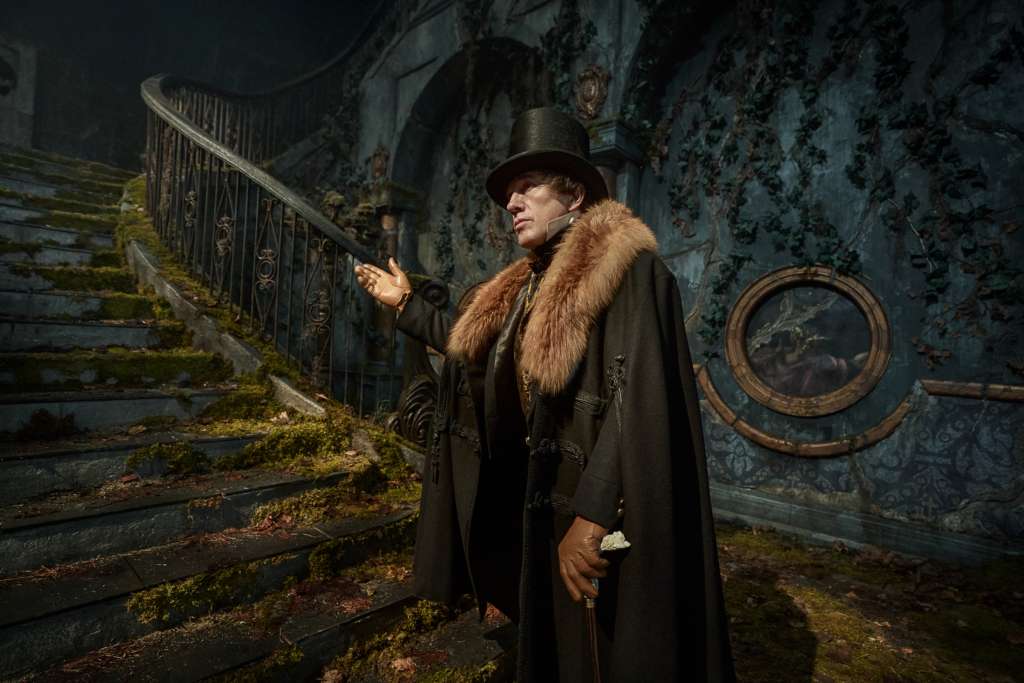
FRANKENSTEIN. Christoph Waltz as Harlander in Frankenstein. Cr. Ken Woroner/Netflix © 2025.
Together, Laustsen and Hawley bridge the gap between monster and man, grounding del Toro’s sweeping vision in tactile realism. Their artistry ensures that Frankenstein feels both mythic and intimate, as if the story has been resurrected from the pages of Shelley’s novel and infused with new life.
What sets Frankenstein apart from other adaptations is its emotional craftsmanship. Every visual element—from the saturated reds of Victor’s laboratory to the muted blues of the Arctic—carries emotional weight. Each costume, each frame, tells its own part of the tragedy.
Guillermo del Toro once said that monsters are “the patron saints of our imperfections.” Through Laustsen’s lighting and Hawley’s design, those imperfections become breathtaking. Their work transforms Frankenstein into what del Toro describes as “a story of love and loss disguised as a horror film.”
In this version, the true act of creation lies not in bringing the dead to life, but in reminding the living what it means to feel.
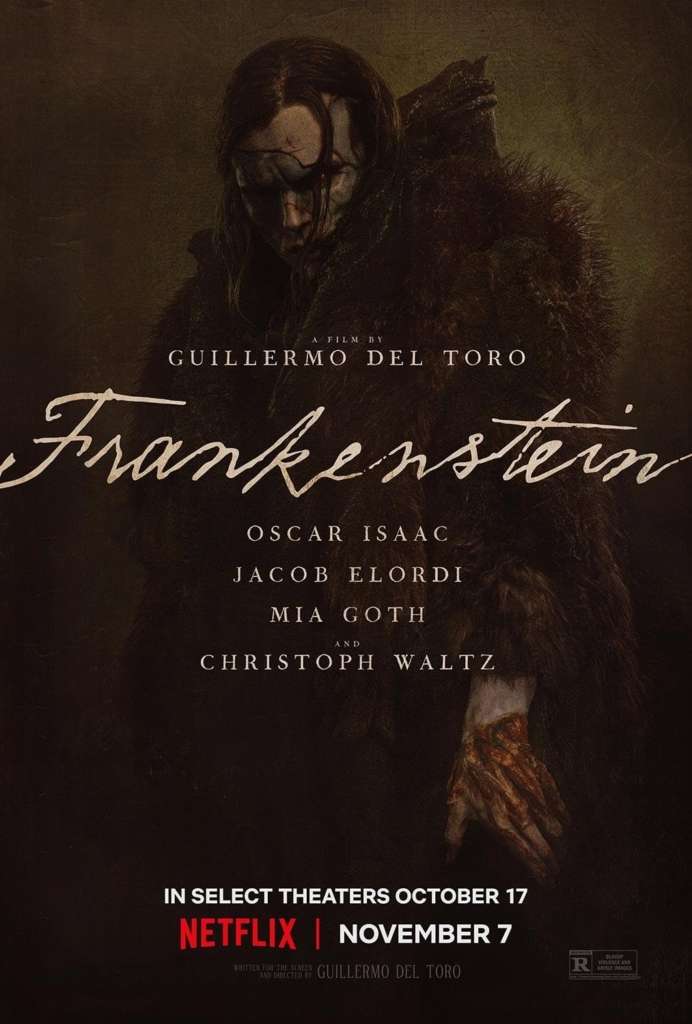
Directed by: Guillermo del Toro
Written by:Guillermo del Toro
Starring: Oscar Isaac, Jacob Elordi, Mia Goth, Christoph Waltz
Relationship Goals streams on Prime Video Feruary 4th, 2025. Be sure to follow E-Man’s Movie Reviews on Facebook, Subscribe on YouTube, or follow me on Twitter/IG @EmansReviews for even more movie news and reviews!