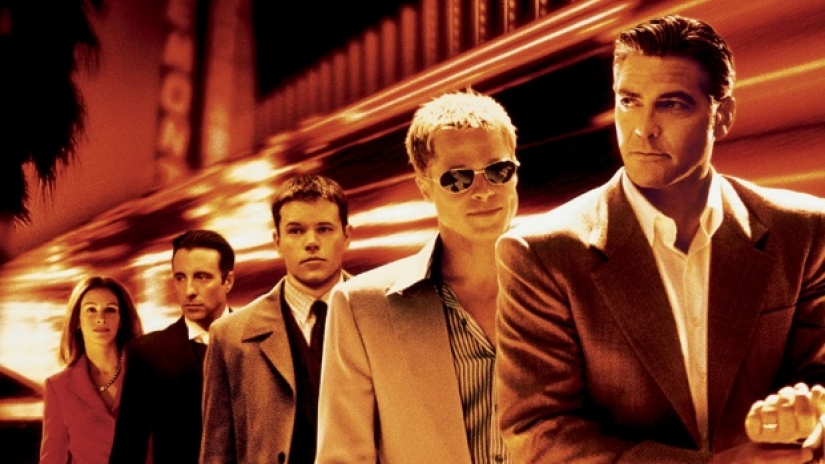

From Frank Sinatra’s swagger in 1960 to George Clooney’s calculated charm in the 2000s, the Ocean’s franchise has captivated audiences for over six decades. What began as a showcase for the Rat Pack’s Vegas lifestyle has evolved into a sophisticated examination of criminal artistry, transforming the heist genre and becoming a cultural touchstone that extends far beyond cinema.
The Rat Pack Origins: Style Over Substance
The original “Ocean’s 11” emerged from the unique circumstances of 1960s Las Vegas. Frank Sinatra, Dean Martin, and their infamous Rat Pack weren’t just making a movie—they were documenting their lifestyle. The film served as an excuse for the group to perform at the Copa Room while cameras rolled, creating a meta-theatrical experience that blurred the lines between performance and reality.
While the original lacked the intricate plotting of its successors, it established key franchise DNA: the Vegas setting, the ensemble cast dynamic, and the romanticization of elaborate criminal schemes. The film’s casual approach to its heist plot reflected the era’s filmmaking style, where star power often trumped narrative complexity. Yet this simplicity created space for character interaction and wit that would become franchise hallmarks.
The 1960 version also introduced the concept of the casino as an impenetrable fortress, with security measures that seemed almost mythical to audiences. This portrayal helped establish Las Vegas casinos as the ultimate challenge for cinematic criminals, setting a standard that would influence countless heist films.
Soderbergh’s Sophisticated Renaissance
Steven Soderbergh’s 2001 reboot transformed the franchise from nostalgic entertainment into a masterclass in genre filmmaking. “Ocean’s Eleven” represented a quantum leap in storytelling sophistication, introducing audiences to meticulously planned operations that rivaled actual casino security protocols.
The modern trilogy elevated the heist genre through its attention to detail and respect for both criminal ingenuity and security countermeasures. Soderbergh’s films presented heists as intellectual puzzles, with each scheme requiring extensive research, technological expertise, and psychological manipulation. This approach reflected real-world advances in casino security, from biometric scanners to sophisticated surveillance networks.
Danny Ocean’s crew became archetypes for specialized criminal roles: the demolitions expert, the tech specialist, the con artist, and the acrobat. Each character brought specific skills that mirrored actual security vulnerabilities, creating a sense of authenticity that made the impossible seem plausible.
Mirroring Real Casino Security Evolution
The franchise’s evolution parallels the actual development of casino security measures. The original film’s portrayal of basic guards and simple safes reflected 1960s reality, while the modern trilogy incorporated contemporary security innovations like facial recognition, digital surveillance, and computerized monitoring systems.
Soderbergh consulted with actual security professionals to ensure accuracy in depicting casino operations. The films showcase real vulnerabilities: human error, technological blind spots, and the psychological manipulation of personnel. This attention to detail elevated audience engagement, as viewers could appreciate both the challenge facing the criminals and the sophistication of modern security.
The Bellagio vault sequence in “Ocean’s Eleven” became iconic partly because it accurately represented the complexity of high-end casino security. Multiple authentication layers, time-locked systems, and redundant monitoring created a fortress that required extraordinary creativity to breach. This realism made the eventual success more satisfying and believable.
Cultural Impact on Gaming and Entertainment
The Ocean’s franchise significantly influenced how popular culture perceives casino gaming and gambling. The films portrayed casinos as glamorous venues where intelligence and skill could triumph over chance, inspiring a generation of viewers to reconsider their relationship with gambling entertainment.
This cultural shift coincided with the rise of online gambling platforms, which began emphasizing skill-based gaming options alongside traditional chance-based offerings. Modern players increasingly gravitate toward casino games that require some skill, such as poker, blackjack, and strategic slot variations, rather than purely luck-dependent options. The franchise’s portrayal of gambling as an intellectual pursuit helped legitimize this preference for games where player decisions impact outcomes.
The films also influenced casino design and marketing, with establishments adopting more sophisticated, elegant aesthetics reminiscent of the Ocean’s universe. The emphasis on style, wit, and intellectual challenge became selling points for both physical and online casino experiences.
Genre Transformation and Legacy
The Ocean’s trilogy fundamentally altered the heist genre’s DNA. Pre-Soderbergh heist films often relied on violence and tension, while Ocean’s proved that charm, intelligence, and humor could drive compelling criminal narratives. This shift influenced countless subsequent films, from “Now You See Me” to “The Italian Job” remake.
The franchise demonstrated that audiences craved intellectual stimulation over simple action sequences. Complex plots requiring multiple viewings to fully appreciate became desirable rather than problematic. This sophistication elevated heist films from B-movie entertainment to prestige projects capable of attracting A-list talent and significant budgets.
The non-linear storytelling, revealing the heist’s true complexity through carefully timed revelations, became a template for genre films. Audiences learned to expect misdirection, hidden motivations, and elaborate schemes within schemes, fundamentally changing how heist movies communicate with viewers.
Modern Relevance and Future Evolution
The franchise’s influence extends beyond entertainment into discussions about cybersecurity, financial crime, and institutional vulnerability. As real-world security becomes increasingly digital, Ocean’s films provide a framework for understanding how sophisticated criminals might exploit technological dependencies.
Recent developments in cryptocurrency, digital identity, and remote banking create new possibilities for heist narratives. The franchise’s emphasis on exploiting human psychology and technological blind spots remains relevant as security systems become more complex but potentially more vulnerable to creative exploitation.
Conclusion
From the Rat Pack’s Vegas playground to Soderbergh’s precision-engineered capers, the Ocean’s franchise evolution reflects broader changes in filmmaking, technology, and popular culture. By transforming casino heists from simple crime stories into sophisticated intellectual puzzles, these films created a template for modern genre entertainment while influencing real-world perceptions of gambling, security, and criminal artistry.
The franchise’s enduring appeal lies in its celebration of intelligence over violence, style over substance, and collaboration over individual heroism. As both cinema and gaming continue evolving, Ocean’s remains a benchmark for how entertainment can elevate familiar concepts through superior execution and cultural awareness.