The casino floor is cinema’s most enduring green-felt confessional, a glittering microcosm where the masks of social etiquette slip to reveal the raw machinery of human behavior. For the audience, the draw is a form of relatable curiosity: we are perpetually fascinated by the spectacle of the “bet,” a moment where power, calculated risk, and blind luck collide. Whether it is the hushed, opulent silence of a Monte Carlo salon or the sensory-overload neon of a modern Las Vegas floor, the casino serves as a high-definition stage for exploring how men and women behave when the stakes move beyond currency into the realm of survival.
From Baccarat to Texas Hold’em: James Bond’s Changing Relationship with Risk
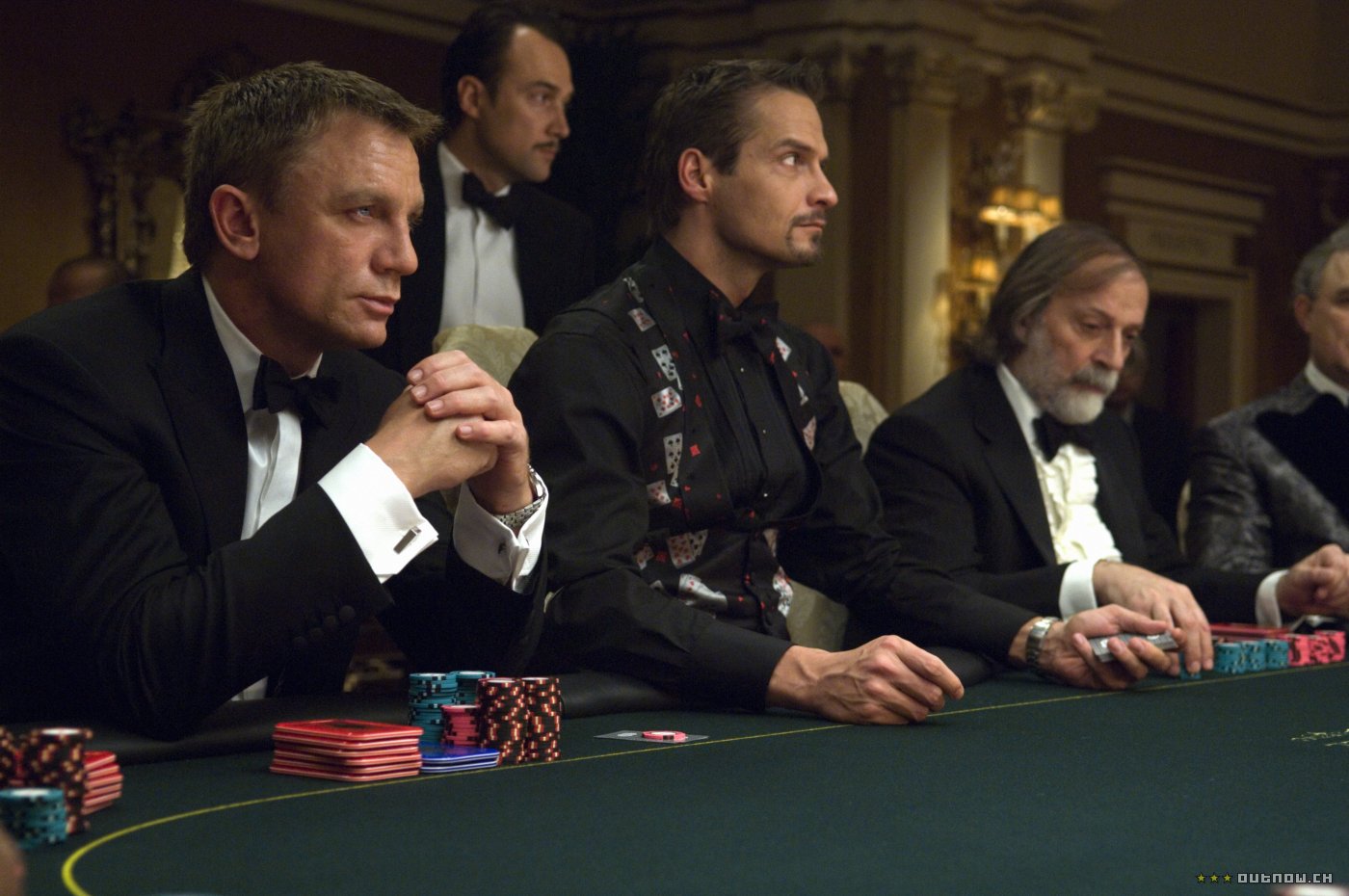
No figure looms larger over the cinematic gaming table than James Bond, yet his relationship with the cards has undergone a profound metamorphosis to mirror the shifting cultural psyche. In the Sean Connery and Roger Moore eras—specifically in Dr. No and Thunderball —Bond was the master of Baccarat, specifically the variation known as Chemin de Fer (or “shemi”).Author Ian Fleming, a gambling aficionado who arguably knew more about the odds than he did about small arms, chose Baccarat specifically because it is a “game of chance.” In these early outings, Bond’s success was tethered to fate. By placing the welfare of the Western world on a game with no mathematical strategy, Bond embodied a “devil-may-care” detachment that resonated with a world-weary middle class.However, the 2006 reboot, Casino Royale, signaled a shift toward “advantage play.” The game was updated to Texas Hold’em to satisfy a modern audience’s desire for a hero who relies on “brains and strategy” rather than the whims of fortune — the same appetite that has driven millions of players toward Canadian Online Casinos, where live poker and skill-based variants have eclipsed the passive slots of an earlier era. The showdown between Daniel Craig’s Bond and Le Chiffre is a visceral exercise in psychological warfare. It isn’t just about the cards; it’s about reading the “tell”—Le Chiffre’s involuntary ocular twitch—and the calculated aggression of the bluff. This shift transformed the casino from a house of luck into a strategic battleground where the intellect is the primary weapon.
The Gritty Authenticity of Martin Scorsese’s Casino

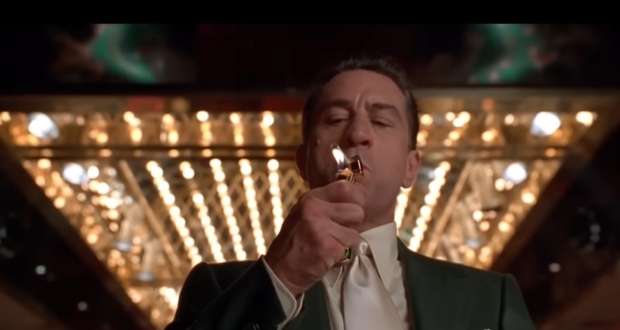
While Bond offers the fantasy of the high roller, Martin Scorsese’s 1995 masterpiece Casino remains the definitive autopsy of the industry’s soul. Scorsese used the setting to portray the casino as a rigid “system with rules and pressure” rather than a playground, going to extreme lengths to manufacture a sense of immersive reality.The production was famously shot in the real Riviera casino in Las Vegas between midnight and 10 AM, allowing the crew to film amidst the genuine hum of gambling operations. Scorsese even utilized real croupiers instead of actors; they dealt with professional fluidness, saving the production the time required to train novices. The authenticity extended to the consultancy of real FBI agents and parolees, who ensured the mannerisms of the mobsters and dealers were chillingly accurate.The film’s visual excess—exemplified by a staggering $1 million wardrobe budget and Robert De Niro’s 70 custom outfits—was matched by its commitment to historical truth. The harrowing car bombing of Sam “Ace” Rothstein was inspired by the real-life attempt on Frank Rosenthal, who survived only because of a metallic stabilization sheet under his driver’s seat. Perhaps most impressively, Scorsese captured the literal end of an era by filming the actual demolition of the Dunes hotel to serve as the film’s concluding explosion.
The Rat Pack and the Birth of the “Cool” Casino Aesthetic

The public perception of Las Vegas as the pinnacle of mid-century “cool” was a calculated product of the “Rat Pack.” The group’s name was famously minted by Lauren Bacall in 1955 after she surveyed the disheveled remains of Sinatra, Bogart, and others following a five-day “sleepless rampage” through the desert.The Rat Pack—Sinatra, Martin, Davis Jr., Lawford, and Bishop—transformed the casino into a visual statement of elite, masculine access during their “Summit” at the Sands Hotel. This era effectively bound American politics to the entertainment industry; Sinatra, Davis Jr., and Lawford even sang the National Anthem at the 1960 Democratic National Convention to support John F. Kennedy. Their wild lifestyle of martinis, cigars, and “positive drinking” suggested that the “good life” was a tangible reality available right now on the casino floor.As Dean Martin famously quipped to his audiences:”Be sure to buy a copy of my new book, The Power of Positive Drinking.”
Strategy vs. Hollywood Fiction: The Science of the “Big Win”
Cinema often blurs the line between legitimate strategy and cinematic magic, particularly when depicting card counting.
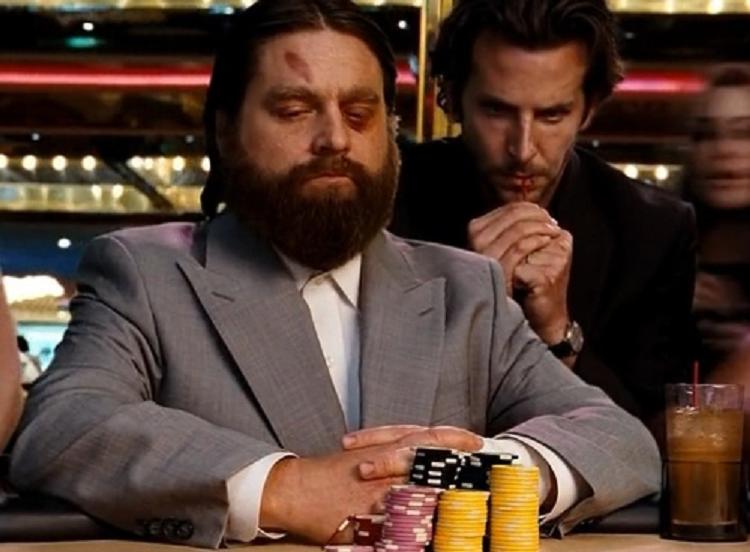
- Rain Man (1988): This film popularized card counting but framed it as a near-supernatural, savant-like miracle. While the casino’s reaction—surveillance teams identifying “unusual” wins—was accurate, the depiction of Raymond’s clinical certainty across six decks is more Hollywood fantasy than mathematical reality.
- 21 (2008): This remains the most structurally accurate portrayal of “advantage play.” It focuses on the MIT team’s mechanics: the signaling, the “big player” rotation, and the brutal bankroll discipline required to beat the house.
- Ocean’s Eleven (2001): While the shared vault between the Bellagio, Mirage, and MGM is a pure fiction, the film’s “camera loop” heist inspired real-world security researchers. MIT experts later demonstrated at the DEF CON security conference that looping surveillance feeds was a legitimate vulnerability, citing the film as their primary inspiration.
The “Casino Aesthetic”: How Filmmakers Manufacture Tension
To amplify the suspense, filmmakers rely on a specific technical toolkit. Sound design is layered with the rhythmic shuffle of cards and the clink of chip stacks, often paired with pulsating beats that mirror a rising heart rate.The visual language is defined by high-contrast lighting. Cinematographer Robert Richardson, a frequent Scorsese collaborator, used the Super 35 format in Casino to manage the “steep,” unforgiving desert light. Richardson worked within a specific lighting range of T2.8 to T4, utilizing the 4:1 zoom lens as his “workhorse” to capture the frantic energy of the floor. To create a sense of manufactured drama, he used hard frontal light on De Niro, creating a saturated, vibrant look that stood in stark contrast to the “white, dry-lake” feel of the Nevada desert. This contrast emphasized the casino as a neon oasis of excess surrounded by a bleached, lethal void.
The House Never Stops Evolving
As we move further into the 21st century, the cinematic casino has undergone another metamorphosis. It has evolved from the shadowy dens of moral temptation into bright, strategic battlegrounds. Today, filmmakers are beginning to explore “digital reflections”—depicting the isolation of digital slots and the omnipresence of algorithmic surveillance, where the tap of a screen replaces the clatter of a chip.Yet, despite the technological shift, the core appeal remains unchanged. Our fascination with these scenes stems not from the mechanics of the games, but from a universal human desire to see how people behave when everything—money, power, and life—is on the line. In the end, the casino is merely the stage; the real gamble is always the human heart.