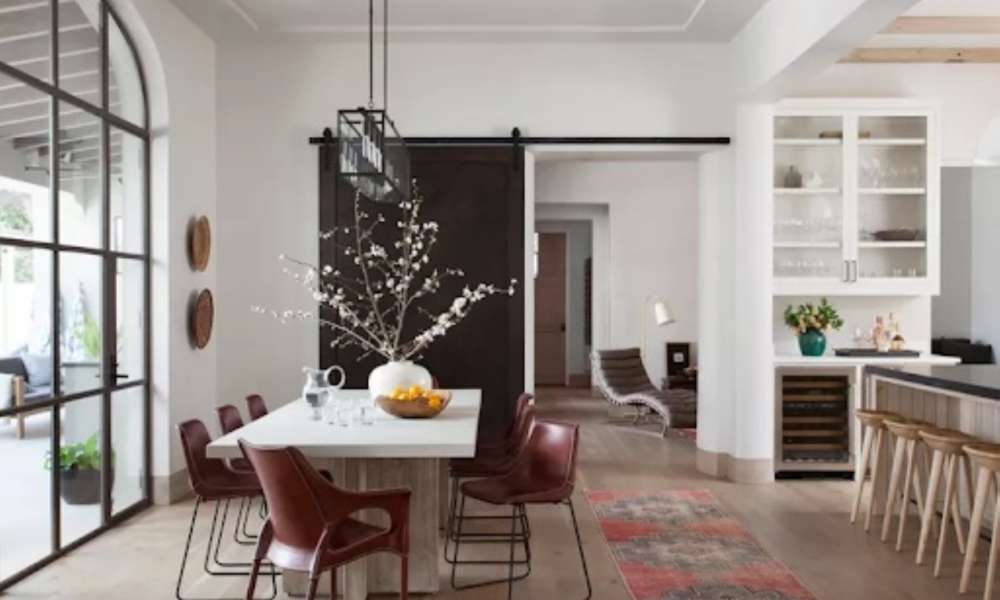

A dining room shapes more than meals. It sets the tone for conversation, gathering, and shared moments. And thoughtful design can quietly elevate all of it.
Thoughtful interiors find beauty in function, whether it’s well-chosen dining furniture or couch covers by Mamma Mia Covers that quietly protect without drawing attention. These dining room ideas are built on that same balance.
Here’s how to bring Architectural Digest-inspired dining spaces to life, whether you’re working with a compact nook or a spacious area.
Start with the Shape of the Room
The best dining room designs take cues from the shape and flow of the space itself. In smaller spaces, a rectangular table placed parallel to the longest wall can open circulation and create a sense of balance. In more open layouts, round or oval tables invite movement and soften hard angles, encouraging easy conversation.
Architectural Digest often highlights the importance of aligning furniture with the room’s natural lines and walking paths. Think of your dining set as part of the architecture, not something that interrupts it.
Scale and Proportion Matter
One of the biggest design missteps in dining rooms is choosing furniture that feels too large or too small. Too-big pieces make a layout feel cramped. Too-small ones leave it feeling adrift.
Measure the space before selecting a table and chairs. A good rule of thumb is to leave at least 36 inches between the edge of the table and the wall or other furniture so chairs can pull out comfortably. In cozier rooms, benches along one side can save space and add a relaxed, casual vibe.
Proportion isn’t just about size. It’s about harmony. The scale of the table, chairs, light fixtures, and even artwork should all feel intentional and related.
Let Light Define the Mood
Lighting can transform a dining room from functional to soulful. Overhead fixtures aren’t just utilitarian; they’re a chance to make a statement.
Architectural Digest exhibits spaces where layered lighting makes all the difference: task lighting for serving, ambient lighting for mood, and accent lights to highlight art or architectural features. Dimmers are a must. They let you shift from bright family dinners to soft, candlelit evenings without changing a thing.
Natural light matters too. In sunny rooms, sheer curtains diffuse glare and keep the mood light. In darker spaces, mirrors opposite windows reflect brightness and visually enlarge the area.
Embrace Texture and Materials
The surfaces in your dining room — walls, floors, chairs, and tabletops — set the tone and create a tactile richness that invites touch and presence.
- Wood tables with visible grain bring warmth.
- Upholstered chairs add softness under the hands and a quiet sound, especially in homes with kids and pets.
- Textured wall treatments, from grasscloth to painted paneling, give depth without visual clutter.
- A stone accent wall can anchor a light wood table; a woven rug can ground a sleek metal base.
The goal is cohesion and comfort, not contrast for its own sake.
Choose Seating That Encourages Gathering
Chairs are more than functional — they shape how people feel at the table. In larger rooms, mix chairs and benches to create a collected, lived-in look. Benches bring an informal, family-friendly energy, while upholstered chairs lend sophistication.
In smaller spaces, choose chairs with open backs or slender legs. They create airiness and make the room feel less crowded. If pets are part of your household, slipcovered or wipeable upholstery can help keep furniture looking fresh without daily worry.
Anchor the Space with Rugs and Floor Treatments
Rugs in dining rooms do more than add color. They define the eating zone, soften footsteps, and help acoustics. When choosing a rug, opt for one that is large enough to accommodate chairs, ensuring they stay on the rug even when pulled out. Rugs that are too small make the space look fragmented.
Patterns are a great way to bring personality without overwhelming a space. Subtle geometrics work well with simple furniture; bold patterns can anchor minimalist designs. Just be sure the rug’s colors complement your room’s larger palette.
Wall Art and Decor That Feel Right
Walls in dining rooms don’t need to be blank or overly decorated — they need to feel intentional.
- A large-scale piece of art can become a conversation starter.
- A gallery wall with framed prints or family photos adds warmth and tells a story.
- Even mirrors work beautifully here, reflecting light and making the room feel larger.
Architectural Digest often showcases walls that feel curated, not cluttered — pieces that have meaning and shape the room’s character rather than fill every inch.
Flexibility for Real Life
Living with kids, pets, and everyday mess means your dining room needs to be as adaptable as it is beautiful. Choose finishes you don’t worry about. Tables with protective surfaces, chairs with easy-to-clean upholstery, and durable light fixtures let you enjoy the space without fear of ordinary wear.
This idea extends beyond materials to layout, too. Think about how the room transitions from weekday breakfasts to weekend parties. Flexible arrangements that accommodate both large gatherings and small family dinners make your dining room work harder for you.
Final Thought: Dining Rooms That Feel Inviting and Intentional
Architectural Digest–inspired dining rooms balance style and function, using thoughtful proportions, layered lighting, and purposeful materials. When designed with intention, they feel curated yet comfortable, making every meal a memorable experience. The right design creates a space where people naturally connect and linger, turning everyday moments into something special.