
Cinema has been popular since the era of the Lumière brothers and remains one of the world’s most in-demand forms of entertainment. Another confirmation of this is that the modern film industry is measured in the hundreds of billions of dollars, and top Hollywood actors are recognized worldwide.
People of all ages, religions, and social statuses watch movies. Many prefer going to movie theaters because that is where they get the maximum pleasure from films. But today, many people are starting to think about setting up a home theater because they don’t want to go out every time they want to watch a movie. And while in the past having a cinema hall at home seemed like an unaffordable luxury and a whim of the rich, many can afford it today. Here is a detailed cost breakdown for a home theater.
Main Components and Their Average Prices
The components listed below are essential for setting up a home theater.
TV or Projector with Screen
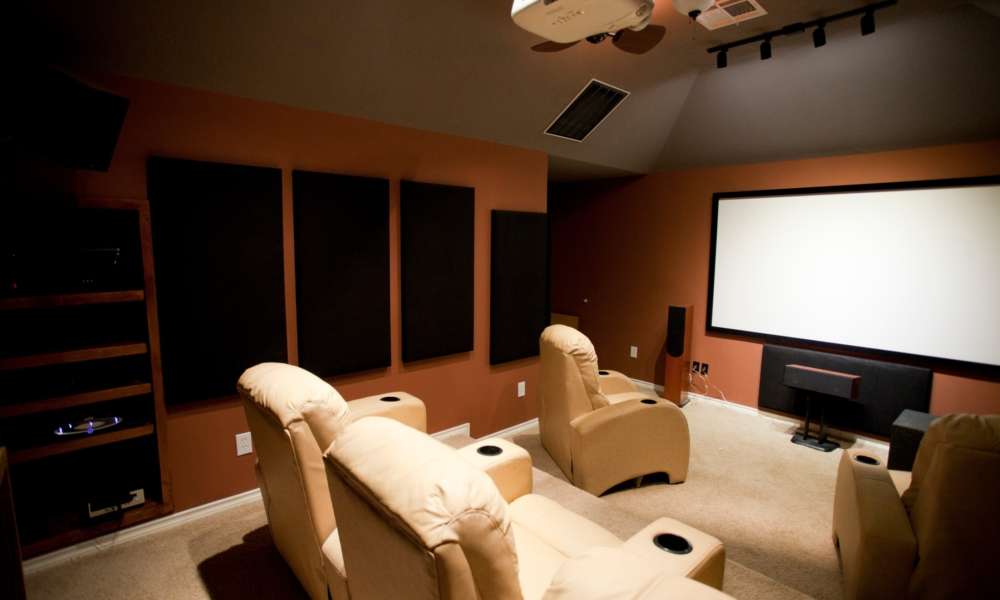
The first thing you need to decide is whether to use a TV or a projector. Both options are good, but the choice depends on your needs. If the room is very bright, it is better to choose a high-quality TV. In a dim room, a projector will create a more realistic image.
As of today, a good 65-inch 4K TV can cost from $500 to $2,500. Premium OLED and 8K models can cost $3,000 or more. Consider brands such as Samsung, Sony, or LG, as they offer models that often have voice assistants and streaming apps.
A 4K projector costs from $700 for entry-level models to $5,000 or more for laser models with a long lamp life and excellent brightness. Screens can be fixed or retractable, and the cost ranges from $200 to $2,000. Professional installation with ceiling mounting and hidden cable routing can add another $1,000–$2,500.
If you do not know which option to choose, measure the distance from the wall to the seating area and use the free screen size calculator on the Epson or Sony website. The distance determines the ideal diagonal without causing eye strain.
Audio System
The audio system is something you should not skimp on, as it creates that movie-theater sound effect. Today, surround sound has become the standard, and Dolby Atmos remains the most popular choice for premium systems. A basic 5.1-channel system costs from $400 to $1,000, while a mid-level 7.1 system or one with Atmos support usually costs from $2,000 to $5,000. High-end systems for large rooms can cost more than $10,000.
If you are assembling a system from scratch, you will need an AV receiver, a subwoofer, and several speakers. For example, Yamaha, Denon, and Marantz receivers are known for their reliability. You can also find calibration apps such as Audyssey MultEQ Editor or YPAO, which help adjust the sound to the room’s acoustics. Professionals can perform a more precise calibration using special equipment, but this increases the cost.
Receiver and Other Video Sources
The receiver is the main component of a home theater; it’s the brain. It connects the TV, speakers, streaming devices, and gaming consoles, controlling everything at once. Without it, the system won’t function properly. Basic models cost about $400–$700, mid-range options are around $1,000–$1,500, and advanced versions go over $3,000. Such receivers support 8K video transmission, allow music playback in multiple rooms, and deliver realistic surround sound.
The overall cost also depends on video sources. For example, a 4K Blu-ray player costs about $150–$300. Streaming devices like Roku Ultra, Amazon Fire Cube, or Apple TV 4K range from $50 to $200. If you’re a gamer, add another $500–$600 for a PlayStation 5 or Xbox Series X.
To ensure your movies and shows stream smoothly, check your internet connection for a stable 4K connection. You’ll need at least 25 Mbps per stream.
Connection Cables
The importance of cables is often forgotten, although the stable operation of the entire system depends on them. For a home theater, you will need HDMI 2.1 cables, speaker cables, power cables, and sometimes optical or Ethernet cables. You should budget between $200 and $800 for high-quality cables.
If you plan to hide the wiring inside the walls, be prepared to spend more—about $1,000–$2,000 —especially if you hire an electrician to ensure compliance with the National Electrical Code (NEC). For in-wall installation, always choose CL2- or CL3-rated cables—they are fire-resistant and help prevent overheating.
Window Light Filters
Daylight can noticeably reduce image quality. To reduce glare and reflections, it is worth installing thick curtains or blinds. Regular manual options cost about $75–$150 per window, while automatic ones range from $300 to $800 each.
In addition, such curtains help maintain the room’s comfort. In summer, they protect from heat, and in winter, they retain warmth, which ultimately helps reduce heating and air conditioning costs.
Lighting
Lighting in a home theater should be comfortable; it should help you see details without dazzling or distracting from the screen. Built-in ceiling lights cost about $150 each, including installation. LED strips can be installed along baseboards or under seats. This will cost about $20–$50 per meter.
If you want more convenience, you can install smart lighting, such as Philips Hue or Lutron Caséta. Such systems let you control the light via an app or by voice, but they are more expensive, ranging from $500 to $1,500.
Seating
Comfortable chairs are one of the most important parts of a home theater. They determine whether you can truly relax and enjoy the movie. A regular recliner chair costs about $300–$500, while more expensive models, leather ones with a USB charging port and a massage function, cost $1,200–$1,800 per chair.
If you want several rows of seats, you will need to install platforms or special risers so viewers in the back can see the screen. Such platforms cost about $300–$1,000 per row. As a result, comfortable seating for a medium-sized theater room can cost from $4,000 to $10,000.
Materials for Interior Finishing
To make a room look like a real theater, you need to do finishing work: install drywall, paint the walls, lay the flooring, and decorate the ceiling. In 2025, such work costs approximately $25 to $50 per square foot. This means that finishing a room of about 200 square feet will cost around $5,000 to $10,000.
If you add more details, such as wall panels, carpet, or stage lighting, the total cost can increase to $15,000 or more.
Soundproofing
Good soundproofing is what makes a home theater truly comfortable. With it, you can watch movies at high volume without disturbing neighbors or family members. For this, special materials are used: acoustic panels, soundproof coverings, and vinyl with a sound-absorbing layer. Usually, such solutions cost from $10 to $30 per square foot.
To achieve the best effect, it is important to seal all gaps, install a double layer of drywall, and add door seals. For a room of about 200 square feet, this work will cost approximately $2,000–$6,000. Among reliable brands are Auralex, ATS Acoustics, and Primacoustic. Their materials are often used even in professional studios.
Accessories
Accessories make the space more functional and enjoyable. Examples include:
- Smart remotes ($150–$500)
- Popcorn machines ($100–$300)
- Mini fridges ($200–$600)
- Media racks ($200–$800)
- Acoustic diffusers ($300–$1,000)
These are not essential, but they improve comfort and convenience.
Professional vs. DIY Installation Costs
Before deciding whether to install everything yourself or hire professionals, think about whether you have enough experience, time, and patience. Yes, doing everything yourself is cheaper, but professional installation guarantees safety, accuracy, and reliability. Installers are familiar with all building codes and regulations, ensuring the work is done correctly and without mistakes. In addition, specialists will help set up the equipment to ensure the system operates at full capacity. Below is a simple comparison of the two options:
| Category | DIY Installation | Professional Installation |
| Total Cost Range | $0 to $5,000 (materials only) | $5,000 to $20,000+ (labor and materials) |
| Time Required | Several weekends to months | Completed in 3–7 days |
| Electrical Work | Basic outlet use only | Full wiring, dedicated circuits, code compliance |
| Audio/Video Calibration | Done manually via built-in tools | Calibrated using specialized meters and software |
| Aesthetics and Finish | Visible wiring, basic look | Hidden cables, polished appearance |
| Safety and Insurance | Homeowner liability | Insured professionals and warranty coverage |
| Support and Maintenance | Self-service troubleshooting | Ongoing professional support |
Hidden and Ongoing Expenses
In addition to the costs involved in creating a cinema, one must also consider those that will arise as a result of its use:
Maintenance, Repairs, and Software Updates
Any equipment in a home theater requires maintenance. For example, projector lamps need to be replaced every 3,000–6,000 hours of use, and this usually costs from $150 to $300. Receivers and speaker systems sometimes require firmware updates, and streaming devices often become outdated after 5 years.
To extend the lifespan of your equipment, register your devices. This will give you access to extended warranties and software updates. Many modern brands already offer wireless updates that automatically fix errors and improve system stability.
Energy Consumption and Utility Costs
During operation, a home theater consumes about 500 to 1000 watts of electricity. If you use it for about 20 hours a week, this will add approximately 40–80 kWh per month, which equals about $6–$12 to the electricity bill. You can check current rates on the U.S. Energy Information Administration (EIA) website.
To save money, choose TVs and projectors with the Energy Star label—they are more energy efficient and help you save without sacrificing image quality.
Insurance and Warranty Coverage
Contact your insurance company to check whether your policy covers expensive electronics. In some cases, such devices require additional insurance protection, which costs about $100–$300 per year. An extended warranty for main components, for example, a projector or receiver, costs about the same.
To protect your equipment from power surges and electricity interruptions, install a surge protector or an uninterruptible power supply (UPS). Their cost is usually between $150 and $400, and they help prevent damage to your equipment in case of unexpected failures.
Apartment vs. House Installation
Here are the main differences between creating a movie theater in a house and an apartment:
| Category | Apartment Installation | House Installation |
| Available Space | Limited, typically one small room | Dedicate a large room or a basement |
| Soundproofing Needs | High — shared walls and neighbors | Moderate — isolated structure |
| Electrical Flexibility | Limited; may need landlord or HOA approval | Full control over wiring and circuit setup |
| Acoustic Performance | Can suffer from thin walls and reflections | Easier to optimize acoustically |
| Renovation Limits | Usually restricted by lease agreements | Freedom to remodel and add tiers or lighting |
| Average Cost Range | $3,000 to $15,000 | $10,000 to $60,000+, depending on customization |
| Permitting | Requires HOA/landlord permission | Typically, no external permission is required |
Financing Options for a Home Theater Setup
Building a home theater requires a significant investment, and not everyone can afford it all at once. Fortunately, there are several financing options:
In-Store or Manufacturer Financing
Many popular stores and electronics brands offer installment plans for home theater purchases. For example, Best Buy, Crutchfield, Samsung Financing, and Sony Financial Services often offer 0% annual interest for 12 to 24 months.
This is a good option if you want to pay for the equipment gradually without paying interest. The main thing is not to miss payments. Even a single delay can lead to deferred interest charges, and the purchase will become more expensive. Therefore, before signing up, be sure to read all the terms — pay attention to possible fees for late payments or for not fully repaying the loan during the promotional period.
Credit Cards with Introductory 0% APR
A credit card with a 0% introductory rate is a convenient way to finance the purchase of a home theater temporarily. Usually, such offers are valid for 12 to 18 months, and during this time, you can repay the money without paying interest. After the promotional period ends, the standard rate applies, which often exceeds 20%.
If you decide to use this option, plan your payments to pay off the debt before interest accrues. Some cards also offer cashback or bonus points on electronics purchases, a nice perk that helps you get some of your money back.
Short-Term Loans and Cash Advances
If you want to finish setting up your home theater without unnecessary delays, consider an affordable short-term borrowing option. Such loans are issued quickly — often within 24 hours — and are great for covering remaining expenses, such as wiring, installing seats, or final work.
Before taking out a loan, be sure to check the lender’s reputation and make sure all terms are transparent. It is important to understand the payment schedule and the total amount you will pay, including all fees. This will help you avoid overpayments and unpleasant surprises.
Personal Loans
A personal loan is another convenient way to finance a home theater. It can be obtained from a bank, a credit union, or an online lender. Such loans have a fixed interest rate, so you know in advance how much you will pay each month. In 2025, the average annual interest rate for personal loans ranges from 10% to 18%, depending on your credit score and the chosen lender.
You can calculate the total repayment amount using the calculator on the ConsumerFinance.gov website. This option is suitable for both homeowners and renters who want to spread payments over one to five years and have a clear payment schedule. These loans do not require collateral, but if you have a good credit history, you can qualify for better terms and a lower interest rate.
Common Mistakes That Increase Costs
Many people spend more on a home theater than they planned simply because they did not think everything through in advance or underestimated the costs. The main thing is not to buy the most expensive equipment but to choose the optimal solution that combines quality, convenience, and a reasonable price.
Here are the main mistakes to avoid:
- A screen that is too large. If the screen does not match the viewing distance, the image loses clarity, and your eyes get tired quickly. Before buying, be sure to measure the distance to the viewing area.
- Lack of soundproofing. This is especially important for apartments and houses with neighbors. Without soundproofing, loud sounds can disturb others, and you may have to spend money on modifications later.
- Cheap cables. Saving on cables often leads to problems — interference, signal delays, or even equipment damage.
- Insufficient ventilation. Amplifiers and projectors produce a lot of heat. Without proper cooling, the equipment can overheat and wear out faster.
- Excessive decor. You should not spend money on decorations that do not affect sound or image quality.
- Ignoring energy consumption. Choose devices with the Energy Star label—they help save energy and lower your bills.
- Weak internet. If you plan to watch movies in 4K or 8K, make sure your internet is fast enough. Sometimes this requires changing your plan or equipment.
Remember that Details Define Your Home Theater
Creating a home theater from scratch requires attention to detail, but the result is worth it. Choose the right projector, screen, and audio system, and install all components correctly, and your home will become a place for unforgettable movie premieres and musical evenings. The main thing is not to rush and to choose components that match your preferences and budget.