
The casino, and particularly the Las Vegas casino, has been the backdrop for so many movies that it’s almost impossible to count them. They’ve also crossed over a huge number of genres from comedies like The Hangover to tragedies like Leaving las Vegas and from crime capers like the Oceans series to life stories like The Last Showgirl. But from all the movies ever made in or about Sin City, one stands head and shoulders above the rest – Martin Scorsese’s 1995 masterpiece, Casino.Written in collaboration with New York journalist and co-collaborator on his 1990 mob saga Goodfellas, Casino is considered to be the third and final part of the director’s mafia trilogy that began with his breakout success Mean Streets back in 1973.
Initial reviews, while positive, felt that the movie was a reworking of a number of the director’s common themes but didn’t really cover any new ground. However in recent years its depiction of the last days of the mob’s grip over Las Vegas has been reassessed and granted the status of a classic. Maybe this is because the golden age of Vegas seems further away than ever with people now more likely to play on the internet, even if it’s on one of the many bingo sites online or in a casino where players and dealers never actually meet.
A plot that keeps you guessing
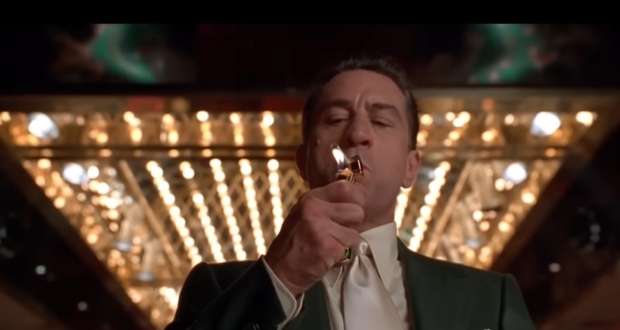
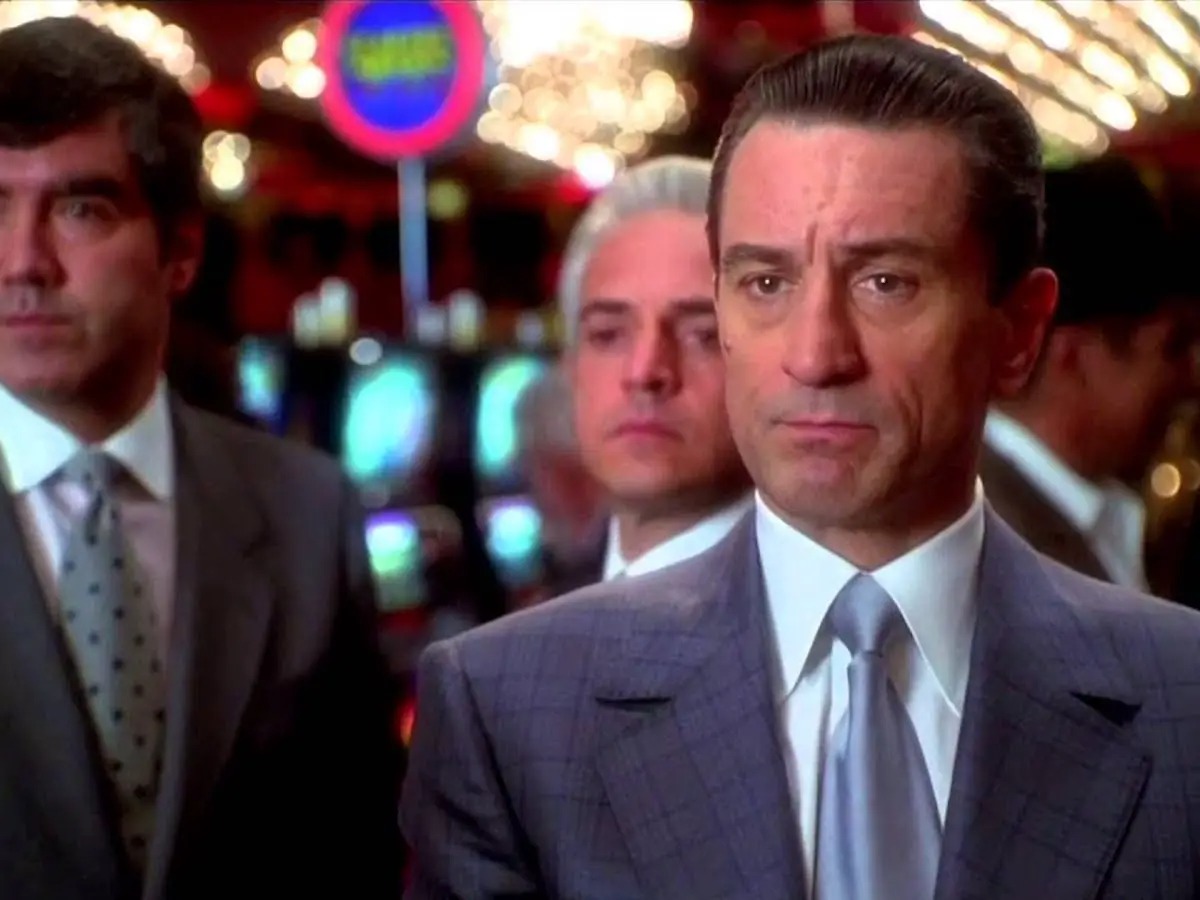
At the heart of the movie is a plot that is more intricate than Goodfellas and certainly more nuanced than Mean Streets which was Scorsese flexing his muscles as cinema’s newest enfant terrible. With a running time of just two minutes under three hours the fact that it’s gripping for every moment of its 178 minute screentime is all you need to know about just how good the story is. Robert De Niro plays Sam ‘Ace’ Rothenstein who has been sent by his Chicago mafia bosses to oversee the Tangiers Casino. He quickly helps to increase its profits significantly, ensuring a steady flow of revenue back to them.
Sensing he might need protection an enforcer called Nicky Santoro, played by Joe Pesci, is sent to do this bringing along his brother and friend for the ride. Sam falls in love with a seductive con artist called Ginger McKenna (Sharon Stone). They marry and have a daughter Amy but before long Ginger is stealing Sam’s money and passing it to her ex, Lester Diamond played by James Woods. Things start to go even more wrong for Sam as he also has run-ins with the licensing authority and Ginger plans to kill him and escape to Europe with Lester and Amy. At the same time Nicky is spiralling out of control, robbing jewellery stores and attracting unwanted attention.
There follow many twists and turns, and more than a few deaths, but to avoid spoilers for anyone who’s not yet caught the movie, we’ll leave it there for now.
A killer cast
Scorsese movies always have a great cast but in casino the chemistry between them is taken to a whole new level. Central to it is, of course, Robert De Niro as Sam Rothenstein. The fact that he’s playing a Jewish character working for the mob makes the characterisation all the more intriguing and he has to show a far wider range of nuanced emotion than in almost any of his collaborations with the director to date.
In Nicky Santoro we have another typically out of control performance from Joe Pesci. Maybe not quite as wild as his Goodfellas character Tommy DeVito but unhinged and impossible to look away from all the same. The manic energy he radiates from the screen means this is a character on a one-way trip to oblivion.
But the standout performance, and one that earned the actor an Academy Award nomination and a Golden Globe, was Sharon Stone for her portrayal of Ginger McKenna. It was her combination of vulnerability and guile that made her so captivating. As one reviewer at the time put it, “Her portrait of a woman for whom even happiness is unsatisfactory is often brilliantly done, and her final breakdown is achieved with genuine subtlety as well as power”.
A question of history
Above all, Casino perfectly captures a key period in the history of Las Vegas. The mob is gradually losing its power and the big corporations are moving in. In some ways this is very similar to the end of GoodFellas when Ray Liotta finds himself living a suburban life in the witness protection programme, impotent and anonymous having once been so powerful. In his case it seems poignant. In the case of Casino it’s like the bad guys have finally been run out of town.
In both cases it’s a tale of excess that inevitably leads to loss.