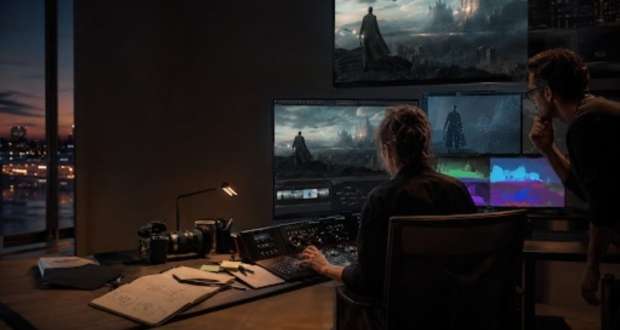
Moving images reveal questions that static boards cannot: whether a performance has enough time, whether a camera move helps the scene, and whether the rhythm imagined on paper survives in sequence.
A storyboard can describe a film with remarkable economy. A few drawings establish scale, composition, screen direction, and the order of events. Yet the board remains silent about many things that become obvious only when the scene starts moving. How long does a look need to register? Does the camera arrive before or after the actor turns? Can an action fit inside the planned shot without feeling rushed? Does the transition create tension or merely call attention to itself?
Previsualization exists to expose those questions before production makes them expensive. It can be as simple as timed storyboard frames with temporary dialogue or as detailed as a rough three-dimensional sequence. The format matters less than the purpose: the director, cinematographer, editor, production designer, and other collaborators need a shared representation of how the scene may unfold.
Seedance 2.0 adds another approach to that process. Its combination of text, image, video, and audio references can turn storyboard materials into short audiovisual sequences with controlled motion, camera direction, and sound. I would not treat the output as a miniature finished film. I would treat it as a way to make creative assumptions visible while there is still time to challenge them.
A Storyboard Shows Composition, but Not Duration
One panel may represent half a second or ten seconds. The drawing itself cannot tell us whether the moment feels patient, tense, awkward, or abrupt. An editor reading the board may imagine a different duration from the director, and an actor may interpret the emotional turn at another pace entirely.
Seedance 2.0 can use storyboard images as references while natural-language instructions describe performance, movement, shot order, and timing. A filmmaker can ask for a slow push as a character notices something outside the frame, followed by a cut only after the reaction settles. Even a rough result can reveal whether the proposed beat needs more room.
The useful question is not whether every gesture appears exactly as imagined. It is whether the sequence helps the team discuss time. If the reveal feels early, the board may need an additional shot or a longer hold. If the scene drags, two panels might be combined. Previsualization earns its place when it produces a better shooting plan, not when it disguises uncertainty with polished imagery.
Filmmakers who want to explore the current interface can begin at the Seedance 2.0 page. I would start with a short scene containing one clear action and one camera decision. A compact test makes it easier to identify what the references control before attempting a sequence with several characters, locations, and transitions.
Assign Each Reference a Specific Job
A film project accumulates materials quickly: character sketches, location photographs, costume tests, shot references, temporary music, choreography videos, lens tests, and pages of script notes. Feeding all of them into one generation does not necessarily create a more faithful result. Some materials may contradict one another, and others may be irrelevant to the scene being tested.
I prefer to assemble references around the question at hand. Character images define appearance and wardrobe. A location image establishes space, palette, and light. Storyboard panels describe composition and shot order. A short video reference can demonstrate a camera path or physical action. Temporary audio can establish dialogue timing, ambience, or musical rhythm.
Seedance 2.0 supports mixed multimodal input, allowing those materials to be combined with written direction. The prompt should identify the function of each reference instead of asking the model to imitate everything. Preserve the character from one image, use the room from another, follow the camera motion from a video, and let the audio determine the timing of the final movement.
This discipline is also useful outside the model. When a director can explain what each reference contributes, the crew receives a clearer brief. The exercise separates essential creative choices from images that are merely attractive. It also reveals disagreements early, before they become competing assumptions on set.
Test Camera Motivation, Not Just Camera Movement
A generated camera can move almost anywhere, which makes restraint important. A sweeping orbit, rapid push, or overhead dive may look impressive in isolation while weakening the scene. Camera movement should respond to attention, emotion, information, or physical action. If the audience cannot feel why the frame moves, the shot risks becoming decoration.
Seedance 2.0 offers stronger instruction following and camera control, and it can reference movement from existing video. A filmmaker can demonstrate the pace and geometry of a move rather than relying on phrases such as “cinematic tracking shot.” The prompt can then explain its dramatic purpose: begin outside the room, cross the threshold as the character makes a decision, and stop before the object on the table is revealed.
I would compare a moving version with a static one. Sometimes the still frame creates more tension because the action unfolds inside it. In other cases, a small push helps the audience register a change that would otherwise be lost. Previsualization makes that comparison inexpensive enough to conduct before the crew commits to track, crane, vehicle, stabilization, or visual-effects requirements.
Lens behavior deserves attention too. Apparent focal length influences space, speed, and the relationship between foreground and background. A wide close shot feels different from a distant long-lens observation. The generated sequence may not reproduce a physical lens perfectly, but it can still help the cinematographer and director discuss proximity, compression, distortion, and camera height.
Explore Blocking Before It Becomes a Scheduling Problem
Scenes with several people often look manageable in individual storyboard panels. Movement exposes the real complexity. Characters cross one another, turn away from light, block important props, or arrive at marks too quickly. A camera path that works for the first action may fail when a second performer enters.
Seedance 2.0 is designed to handle more complex interaction and motion with improved physical plausibility. For previsualization, this can help directors explore where performers begin, when they move, and how their actions overlap. The result does not replace rehearsal, but it can identify moments that deserve rehearsal time.
Suppose two characters enter a workshop from opposite sides, exchange an object, and continue toward separate exits while the camera moves between them. A moving concept can show whether the exchange is readable, whether the camera loses a face, and whether screen direction remains clear. If the scene is confusing in a rough version, adding production polish will not automatically solve it.
I would describe blocking in visible actions rather than emotional labels alone. “She hesitates at the doorway, watches him put down the tool, then crosses only after he steps back” provides a sequence that can be tested. The actor will eventually bring nuance and surprise, but the logistical structure becomes easier for departments to understand.
Bring Sound Into the Conversation Earlier
Many boards are reviewed in silence even when sound will determine the edit. Dialogue length sets the minimum duration of a shot. A distant train may motivate a glance and a cut. Footsteps can announce an unseen character. Music may create an expectation that the image deliberately resists.
The audiovisual generation approach in Seedance 2.0 allows sound and image to be considered together. Filmmakers can use audio references or generated ambience, effects, dialogue, and music to test how a scene breathes. This does not mean temporary sound should become final sound. Its value is that the visual plan can be reviewed against an audible timeline.
I often learn more by listening to a rough sequence without watching it. If every action receives a loud effect, the scene may feel over-explained. If dialogue, movement, and ambience compete for the same moment, the edit may need space. A useful previsualization includes enough sound to reveal structure without pretending that design and mixing are finished.
Use Previsualization to Compare Production Choices
A single visualization can make one plan feel inevitable. Several controlled variations reveal that it is only one option. A filmmaker might compare daylight with a practical interior night, a continuous shot with a three-shot sequence, or an intimate camera position with a more observational one.
Seedance 2.0 can help create these alternatives while preserving selected references for character, setting, or action. The goal is not endless variation. Each version should answer a production question. Does the continuous shot add emotional pressure, or does it merely increase coordination? Does the larger location improve the story enough to justify its cost? Can the scene be simplified without losing meaning?
These comparisons can improve conversations with producers and department heads. A moving reference communicates consequences that a verbal description may hide. Production design can see which part of the set reaches frame. Visual effects can identify transitions or extensions that need planning. The assistant director can better understand the number and complexity of setups.
Video extension and targeted editing also make iteration more focused. If the beginning works but the ending is rushed, the useful portion does not necessarily need to be abandoned. A continuation can test extra time, while a specific edit can explore a changed action or camera decision.
Know What the Previsualization Cannot Promise
A convincing generated sequence can create false confidence. Real actors will not move exactly like generated performers. A physical location may restrict the camera. Weather, lenses, safety, schedule, and budget will reshape the plan. The previsualization is a proposal, not evidence that a shot can be achieved exactly as shown.
I would mark uncertain elements during review. Is a camera position physically possible? Does the stunt require specialist input? Is the lighting direction compatible with the location? Are reflections, shadows, or object interactions concealing a visual error? Seedance 2.0 improves stability and realism, but the crew must translate an image into practical production requirements.
References also require proper rights and permissions, especially when they contain recognizable people, performances, music, artwork, or footage. A visual plan should not depend on material the production cannot legally use. Character likenesses need consent or authorization, and temporary assets should be labeled clearly so they are not mistaken for cleared final elements.
Teams returning from the earlier web address can consult the migration page explaining that Seedance2.ai has moved to Seevio.ai. Recording the current location alongside prompts, settings, and reference files helps preserve the context needed to revisit a previs sequence later.
Keep the Human Conversation at the Center
Previsualization is most valuable when people feel free to disagree with it. A cinematographer may propose a simpler camera solution. An actor may find a more truthful rhythm. A production designer may notice that the frame ignores the most expressive part of the set. The moving concept gives those collaborators something specific to question.
Seedance 2.0 can shorten the path from storyboard to audiovisual discussion. It can combine visual references, movement, camera direction, and sound in a form that exposes timing and continuity. That makes it useful for testing choices before they harden into schedules and costs.
The filmmaker still decides what deserves emphasis, which accident should be welcomed, and when a technically possible shot is wrong for the story. Used thoughtfully, Seedance 2.0 does not replace the collaborative imagination of a crew. It gives that imagination an earlier moving surface—one that can be revised, challenged, and eventually transformed into a production plan everyone understands.