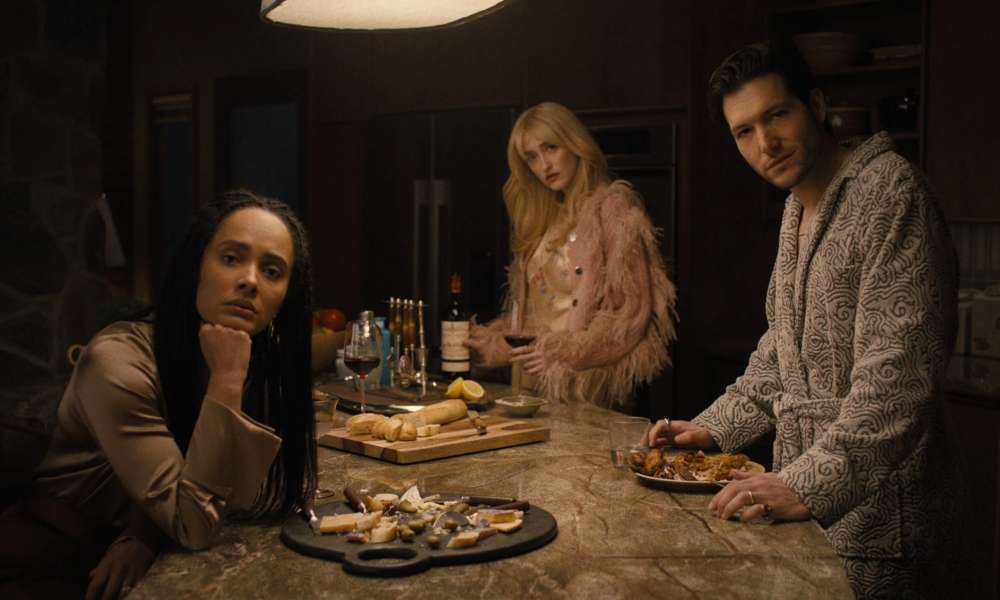

There’s a particular kind of dread that lingers longer than jump scares—a creeping, unshakable unease that builds quietly until it consumes everything. Something Very Bad Is Going to Happen, the eight-episode horror miniseries created by Haley Z. Boston for Netflix, thrives in that space. Backed by the creative influence of The Duffer Brothers (creators of Stranger Things), the series leans into psychological horror with a measured confidence, delivering a story that is less concerned with immediate terror and more invested in sustained emotional and atmospheric tension. The result is a chilling, immersive experience that occasionally stumbles but ultimately leaves a lasting impression.
A Wedding Wrapped in Dread:
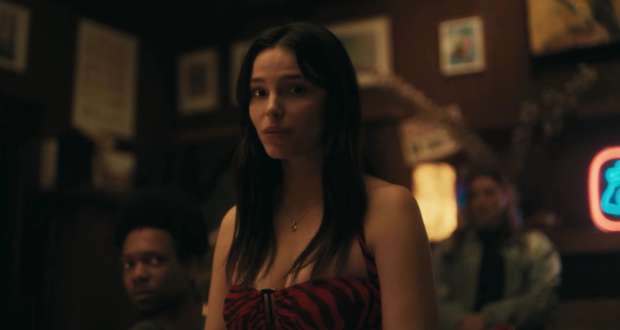
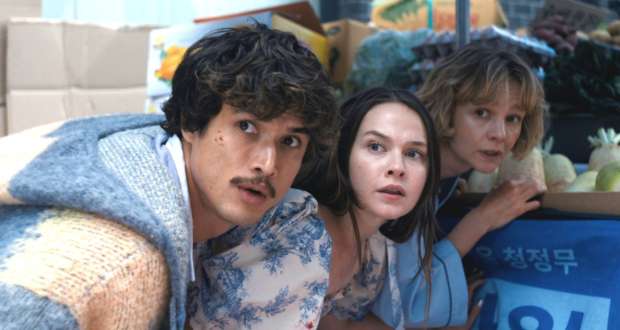
The premise is deceptively simple: Rachel Harkin (Camila Morrone) and Nicky Cunningham (Adam DiMarco) are just days away from their wedding when an unspecified, ominous event begins to unravel their plans. The brilliance of the show lies in how it stretches that uncertainty across eight episodes, transforming what could have been a straightforward horror narrative into something far more disorienting. From the very first episode, the audience is placed in a state of unease, not because of what is happening, but because of what might happen.
The journey to the wedding location sets the tone perfectly. Boston crafts these early moments with a quiet intensity, allowing small irregularities—awkward silences, strange encounters, subtle visual distortions—to accumulate into something deeply unsettling. It’s horror built on suggestion rather than spectacle, and it works remarkably well. By the time Rachel and Nicky arrive, the sense of normalcy has already begun to fracture.
A Setting That Breathes Unease:
Once the setting shifts to the wedding destination, the series expands its scope while tightening its grip on the viewer. The environment itself becomes an active participant in the horror, with the Cunningham family estate exuding an almost sentient hostility. Rooms feel too large, hallways stretch unnaturally, and time seems to bend in subtle, disquieting ways. Boston and her creative team demonstrate a keen understanding of spatial horror, using the setting to mirror Rachel’s growing disorientation.
Rachel serves as the audience’s anchor, and Camila Morrone delivers a performance that is nothing short of mesmerizing. This is a demanding role, requiring her to navigate a wide emotional spectrum while maintaining the character’s fragility and resilience. Morrone rises to the challenge with remarkable precision. She captures Rachel’s gradual descent into paranoia with a raw intensity that never feels forced, allowing each moment of fear and confusion to resonate authentically.
What makes Morrone’s performance particularly compelling is her willingness to embrace the character’s unraveling. As the series progresses, Rachel becomes increasingly erratic, her grip on reality slipping in ways that are both frightening and deeply tragic. Morrone commits fully to this transformation, ensuring that even the most extreme moments feel grounded in genuine emotion. It’s the kind of performance that elevates the entire series.
Performances That Anchor the Madness:
Adam DiMarco, as Nicky, provides a crucial counterbalance. His portrayal of the seemingly supportive fiancé is layered with ambiguity, leaving the audience constantly questioning his intentions. DiMarco plays this duality effectively, offering just enough warmth to make Nicky believable while hinting at something darker beneath the surface. The dynamic between Rachel and Nicky is central to the series, and the actors’ chemistry ensures that their relationship remains compelling even as it becomes increasingly strained.
The supporting cast adds further depth to the narrative. Jennifer Jason Leigh brings a chilling presence to Victoria Cunningham, embodying a maternal figure whose demeanor oscillates between cold detachment and unsettling intensity. Ted Levine’s Boris Cunningham exudes a quiet menace, while Jeff Wilbusch’s Jules introduces an unpredictable energy that keeps the audience on edge. Each character feels deliberately constructed to contribute to the overarching sense of unease.
Boston’s writing is one of the show’s greatest strengths, particularly in how it handles ambiguity. The series resists the urge to provide easy answers, instead allowing questions to linger and evolve. This approach enhances the tension, as viewers are forced to piece together the narrative alongside Rachel. However, this same quality can occasionally become a double-edged sword. There are moments where the lack of clarity borders on frustration, with certain plot threads feeling underdeveloped or unnecessarily opaque.
Style, Sound, and Structural Stumbles:
Pacing is another area where the series both excels and falters. The deliberate, slow-burn structure is essential to the show’s atmosphere, but it does lead to occasional lulls. Some sequences feel stretched beyond their natural limits, as if the narrative is deliberately withholding progression to maintain suspense. While this can be effective in small doses, it occasionally disrupts the overall momentum.
It’s also a gorgeously shot series that really knows how to create a frightening atmosphere. The cinematography leans heavily on shadow and negative space, creating compositions that are as beautiful as they are unsettling. The use of lighting is particularly noteworthy, with scenes often illuminated in ways that obscure as much as they reveal. This visual style complements the narrative perfectly, reinforcing the sense of uncertainty that permeates the story.
The sound design deserves equal praise. Rather than relying on traditional horror cues, the series employs a more subtle approach, using ambient noise and distorted audio to create tension. The result is an auditory experience that feels immersive and deeply unnerving. Silence is used just as effectively as sound, with moments of quiet often carrying as much weight as the more overtly tense sequences.
An Ominous Identity and Lingering Impact:
One of the most striking elements of the series is its recurring title card. Each episode features the phrase “Something Very Bad Is Going to Happen” filling the screen, serving as a constant reminder of the impending doom. This simple device proves remarkably effective, reinforcing the show’s central theme while maintaining a sense of inevitability that lingers throughout the narrative.
Despite its strengths, the series is not without its flaws. The ambiguity that defines the storytelling can sometimes feel excessive, leaving certain aspects of the plot feeling unresolved. Additionally, the slow pacing may not appeal to all viewers, particularly those expecting a more conventional horror experience. These issues prevent the series from reaching its full potential, but they do little to diminish its overall impact.
By the time the final episode arrives, the series has fully embraced its unsettling nature, delivering a conclusion that is both haunting and thought-provoking. Without delving into spoilers, it’s safe to say that the ending prioritizes emotional resonance over straightforward resolution, staying true to the show’s commitment to ambiguity.
Overall:
Something Very Bad Is Going to Happen is not an easy watch, nor is it meant to be. It demands patience and attention, rewarding viewers who are willing to engage with its deliberate pacing and layered storytelling. Haley Z. Boston has crafted a series that lingers in the mind long after the credits roll, anchored by a powerhouse performance from Camila Morrone and supported by a strong ensemble cast.
While it occasionally falters under the weight of its own ambition, the series succeeds in delivering a uniquely unsettling horror experience. For fans of slow-burn psychological horror, this is a journey worth taking—just be prepared for the unease that comes with it.
Something Very Bad Is Going To Happen Series Review: A Slow-Burn Nightmare
-
Acting - 8/10
8/10
-
Cinematography/Visual Effects - 9/10
9/10
-
Plot/Screenplay - 8/10
8/10
-
Setting/Theme - 8/10
8/10
-
Watchability - 8/10
8/10
-
Rewatchability - 8/10
8/10
Overall
Summary
Something Very Bad Is Going to Happen is not an easy watch, nor is it meant to be. It demands patience and attention, rewarding viewers who are willing to engage with its deliberate pacing and layered storytelling. Haley Z. Boston has crafted a series that lingers in the mind long after the credits roll, anchored by a powerhouse performance from Camila Morrone and supported by a strong ensemble cast.
Pros
- Camila Morrone delivers a fearless, career-defining lead performance
- Thick, sustained atmosphere filled with dread and unease
- Strong supporting cast, especially Jennifer Jason Leigh and Ted Levine
- Impressive cinematography and visual storytelling
Cons
- Slow pacing may test viewers’ patience
- Some episodes feel padded, particularly in the middle stretch
Summary: While it occasionally falters under the weight of its own ambition, the series succeeds in delivering a uniquely unsettling horror experience. For fans of slow-burn psychological horror, this is a journey worth taking—just be prepared for the unease that comes with it.