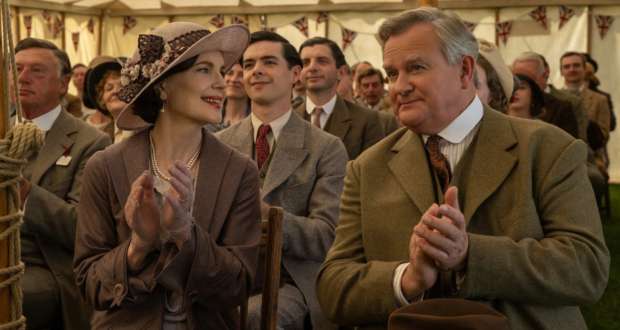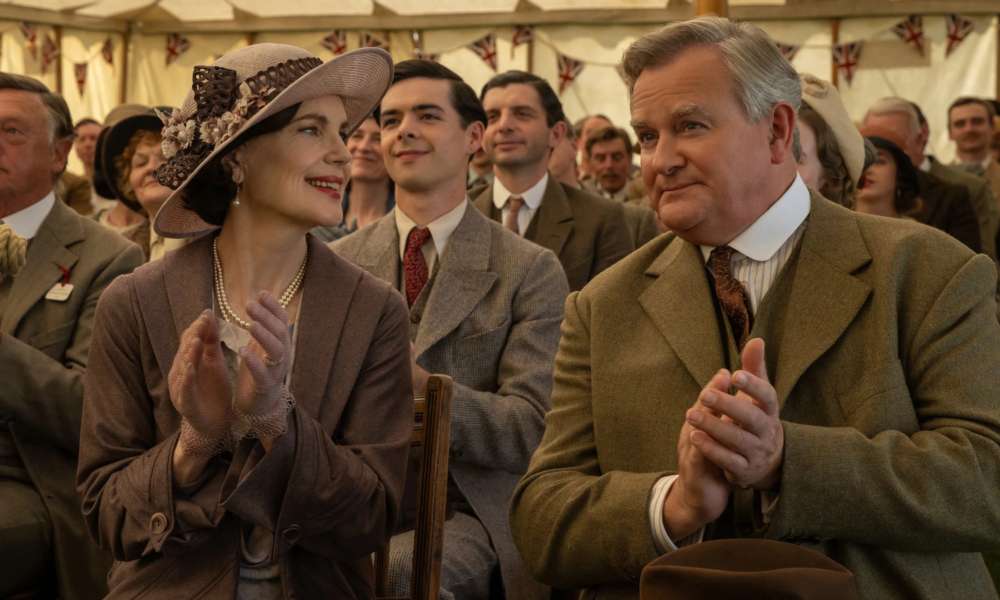

Few television dramas have transitioned to the big screen as gracefully as Downton Abbey. Since its first cinematic outing in 2019, the Crawley family’s saga has carried the stately grandeur, emotional richness, and character-driven storytelling that made the original series a cultural touchstone. With Downton Abbey: The Grand Finale, director Simon Curtis and creator-screenwriter Julian Fellowes deliver the third and final film in the franchise, a project tasked with nothing less than bringing closure to over a decade of storytelling. The result is a moving, elegantly constructed, and occasionally bittersweet farewell that honors the characters, the estate, and the audience’s long-standing investment. While not flawless, it’s a fitting swan song for one of Britain’s most enduring fictional households.
Returning to Familiar Ground with Fresh Energy:
The film opens in the early 1930s, a period that allows Fellowes to explore the shifting tides of social hierarchy, financial security, and personal reinvention as the Crawleys face a series of challenges to their reputation, wealth, and stability. Though the narrative inevitably weaves in drama, scandal, and societal expectations, The Grand Finale distinguishes itself by feeling more reflective and personal than its predecessors.
What stands out is the balance between the grand and the intimate. Curtis directs with an eye for lush period detail—the costumes, the lighting of the Abbey interiors, the bustling city streets, and the elegance of stately balls—but also leans into quieter moments of human connection. It’s in these pauses, often captured in small conversations or glances across a table, that the film builds its emotional resonance.
The ensemble remains the series’ greatest strength. Hugh Bonneville and Elizabeth McGovern bring Robert and Cora Crawley’s partnership full circle, Laura Carmichael continues Edith’s arc of resilience, and Michelle Dockery’s Lady Mary remains the complex, commanding figure at the heart of the estate’s survival. Each performance feels lived-in, a culmination of years of storytelling that makes even minor gestures resonate with history.
Newcomers and Returning Favorites:
Part of the film’s delight comes from the careful blending of new faces with established ones. Paul Giamatti reprises his role as Harold Levinson, injecting humor and a streak of American brashness into the story, while Dominic West returns as Guy Dexter, continuing his arc with Thomas Barrow in a manner both dignified and tender. These returning players enrich the film’s themes of reinvention and belonging.
New additions Joely Richardson, Alessandro Nivola, Simon Russell Beale, and Arty Froushan integrate smoothly, each serving a specific purpose without feeling like distractions. Fellowes has long had a knack for weaving characters into the fabric of Downton without overshadowing the core family, and that skill is on display here. None of the newcomers feel underdeveloped, but crucially, they never steal the spotlight from the Crawleys themselves—appropriate for a finale.
Themes of Legacy and Transition:
The Grand Finale is about change—generational, societal, and personal. The 1930s setting places Downton at a crossroads: modern pressures threaten aristocratic traditions, financial stability becomes increasingly fragile, and reputations prove harder to maintain in a world where the press and the public scrutinize every detail.
The screenplay emphasizes legacy, not just in the sense of preserving Downton Abbey as a house and institution, but also in terms of emotional inheritance. Mary’s role as the de facto steward of the estate echoes Robert’s earlier years of burden, while Edith’s career as a journalist reflects the changing role of women in society. The servants, too, evolve: long-time figures like Carson and Anna look toward retirement, while younger staff step into leadership.
Rather than leaning on melodrama, Fellowes crafts these arcs with restraint. There’s conflict, certainly, but it feels less about fireworks and more about the inevitability of transition—how time reshapes even the grandest of legacies. The film’s reflective tone makes it less immediately thrilling than its predecessors, but more thematically satisfying.
A Balance of Wit and Sentiment:
Fellowes has always balanced biting wit with emotional heft, and The Grand Finale is no exception. The script sparkles in scenes of drawing-room banter, particularly when Paul Giamatti’s Harold collides with the Crawley sense of decorum. There’s also humor found in the servants’ attempts to manage aristocratic eccentricities, grounding the grandeur in everyday human foibles.
Yet, the humor never undercuts the poignancy. The film builds toward an emotional climax that feels quietly devastating, yet also hopeful. Without revealing specific plot turns, suffice it to say that the final act embraces both nostalgia and renewal. Fans will find themselves reflecting on the entire journey of the Crawleys, their joys and losses, and the ways in which Downton has served as both a sanctuary and a stage for change.
Technical Craftsmanship:
As expected, the film is a feast for the eyes and ears. Costumer Anna Robbins once again delivers exquisite period attire, capturing both the elegance of high society and the subtler changes in fashion that define the era. The production design, from candlelit dinners to the vibrant county fair, continues to elevate the Abbey as more than a backdrop—it’s a character in itself, timeless yet evolving.
Ben Smithard’s cinematography lingers on both sweeping estate vistas and the quiet intimacy of family discussions, while John Lunn’s score weaves in familiar motifs, creating an emotional bridge between past and present. Lunn’s music, in particular, underscores the finale’s reflective tone, carrying with it the weight of years spent with these characters.
Where It Stumbles:
Though largely successful, The Grand Finale is not without flaws. The narrative, at times, tries to juggle too many subplots—some involving secondary characters feel rushed, as though included to ensure everyone has a farewell moment. This can occasionally dilute the central storyline, particularly when the film shifts focus away from Mary’s leadership arc.
Pacing, too, is uneven. The first act establishes numerous threads quickly, leading to stretches where momentum lags. For audiences less invested in the Crawleys’ extended family, the opening may feel overly dense. However, once the film finds its rhythm, it builds steadily toward a moving conclusion.
A Fitting Goodbye:
What makes Downton Abbey: The Grand Finale succeed is its willingness to embrace closure without sentimentality. It doesn’t shy away from the idea that time moves forward, traditions evolve, and people must adapt. Yet it leaves space for joy, for love, and for the enduring beauty of shared history.
Simon Curtis directs with a sure hand, never overplaying the drama, and Julian Fellowes crafts a screenplay that is both affectionate and honest about the Crawleys’ place in a changing world. The ensemble cast, many of whom have lived with these roles for over a decade, bring warmth and gravitas that few franchises achieve at their conclusion.
Overall:
For longtime fans, the film is a deeply satisfying farewell, filled with nods to the past, hints of the future, and an overarching sense of gratitude—for the characters, for the estate, and for the audience who has followed them from the drawing rooms of television to the grandeur of cinema.
Downton Abbey: The Grand Finale is not just the end of a story—it is the celebration of a legacy. Beautifully acted, elegantly staged, and thematically resonant, it captures what has always made the franchise special: a blend of history, heart, and humanity. While imperfections keep it from perfection, it delivers precisely what it promises—a dignified, emotional farewell.
Downton Abbey: The Grand Finale Review: A Royal Farewell
-
Acting - 8/10
8/10
-
Cinematography/Visual Effects - 8/10
8/10
-
Plot/Screenplay - 7.5/10
7.5/10
-
Setting/Theme - 6.5/10
6.5/10
-
Watchability - 7.5/10
7.5/10
-
Rewatchability - 6/10
6/10
Overall
Summary
Downton Abbey: The Grand Finale is not just the end of a story—it is the celebration of a legacy. Beautifully acted, elegantly staged, and thematically resonant, it captures what has always made the franchise special: a blend of history, heart, and humanity. While imperfections keep it from perfection, it delivers precisely what it promises—a dignified, emotional farewell.
Pros
- Provides a satisfying and dignified farewell to the Crawley family and the estate
- Hugh Bonneville, Elizabeth McGovern, Laura Carmichael, and Michelle Dockery shine with nuanced, lived-in portrayals
- Paul Giamatti and Dominic West add depth, while newcomers blend seamlessly into the ensemble
- Explores legacy, change, and generational transition with thoughtfulness and restraint
Cons
- Too many storylines compete for attention, leaving some underdeveloped
- While satisfying, the film rarely strays from safe storytelling choices, limiting surprises
Summary: With Downton Abbey: The Grand Finale, director Simon Curtis and creator-screenwriter Julian Fellowes deliver the third and final film in the franchise, a project tasked with nothing less than bringing closure to over a decade of storytelling. The result is a moving, elegantly constructed, and occasionally bittersweet farewell that honors the characters, the estate, and the audience’s long-standing investment. While not flawless, it’s a fitting swan song for one of Britain’s most enduring fictional households.