
John Carney has built a career telling stories about music and the people who create it. From Once to Sing Street and Begin Again, his films understand that music is rarely just about melodies and lyrics. It becomes a reflection of dreams, regrets, relationships, and identity. Power Ballad continues that tradition with a funny, heartfelt, and surprisingly emotional story about artistic ownership, middle-aged disappointment, and the complicated pursuit of recognition.
Led by an effortlessly likable Paul Rudd and a strong dramatic turn from Nick Jonas, Power Ballad balances comedy and melancholy with remarkable confidence. While the film occasionally relies on familiar storytelling beats and never fully explores every idea it introduces, Carney’s warmth and sincerity elevate the material into something memorable. The result is a deeply human musical comedy-drama that resonates long after its final note.
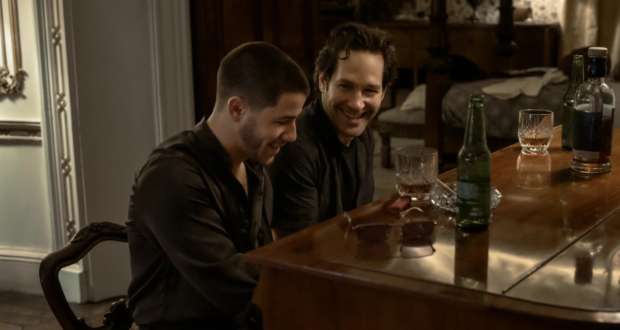
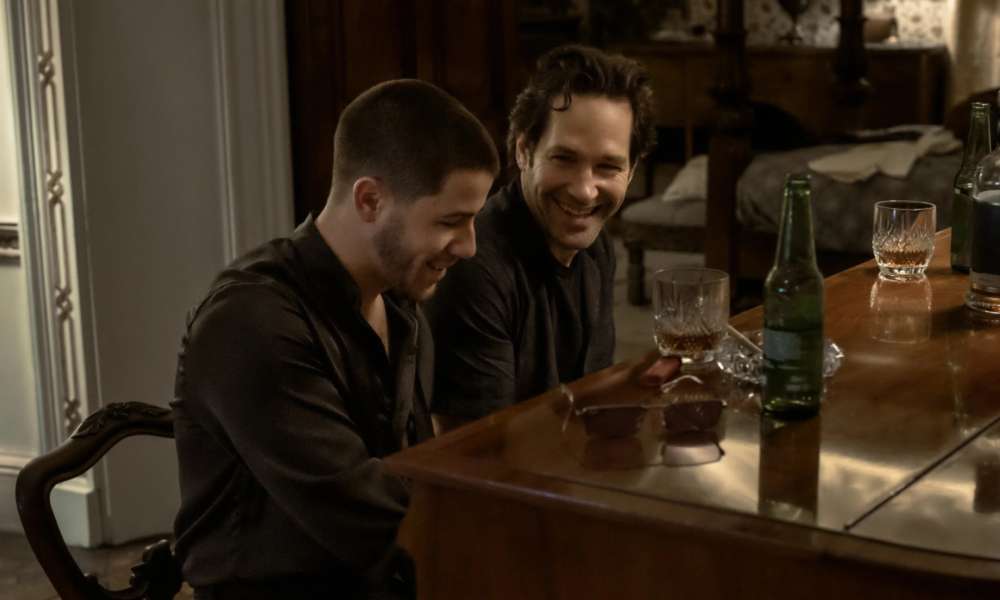
Paul Rudd stars as Rick Power, an American musician who once dreamed of becoming a star but now spends his days singing at weddings across Ireland with his band, The Bride and Groove. Rick has a loving wife, Rachel (Marcella Plunkett), and a daughter, Aja (Beth Fallon), but there is still a lingering feeling that his musical ambitions never received the chance they deserved. When he befriends former boy-band sensation Danny Wilson during a lavish wedding performance, their shared passion for music sparks an unexpected connection. That friendship eventually becomes the catalyst for a conflict that forces Rick to confront his past, his family, and his understanding of success.
Paul Rudd Delivers One of His Most Endearing Performances:
Paul Rudd has spent decades perfecting the art of playing lovable underdogs, but Power Ballad gives him one of his richest roles in years. Rick is funny and charming, but he is also deeply flawed. He carries a quiet resentment toward the life he settled into, even while recognizing how fortunate he is to have a family that loves him.
Rudd navigates those contradictions beautifully. He makes Rick’s frustrations understandable without turning him into a victim. There are moments when Rick behaves selfishly or recklessly, yet the performance never loses the audience’s sympathy. Rudd understands that Rick isn’t chasing fame because he wants wealth or celebrity. What he truly wants is validation. He wants acknowledgment that his talent mattered.
That emotional nuance gives the film much of its power. Rick’s struggle feels universal because it extends beyond music. Anyone who has wondered what happened to their younger dreams will likely see a piece of themselves reflected in his journey.
Marcella Plunkett also delivers strong work as Rachel, grounding the story with warmth and realism. Rather than existing simply as the concerned spouse waiting at home, Rachel feels like a fully realized person with her own frustrations and disappointments. Her relationship with Rick provides some of the film’s most emotionally honest moments.
Nick Jonas and Jack Reynor Bring Complexity to the Story:
Nick Jonas proves to be an excellent counterpart to Rudd. Danny Wilson could have easily been written as a one-dimensional villain, but Carney and Jonas wisely avoid that route. Danny is certainly guilty of questionable decisions, yet he remains surprisingly human throughout the film.
Jonas captures the insecurity hiding beneath Danny’s polished celebrity image. Although he enjoys fame and success, he is also struggling to define himself as an artist beyond his manufactured boy-band persona. That vulnerability creates an interesting parallel with Rick. Both men are searching for artistic legitimacy, even if they pursue it in very different ways.
The chemistry between Rudd and Jonas is one of the film’s greatest strengths. Their early interactions possess an easy camaraderie that makes the eventual conflict feel genuinely painful. The audience understands why these two men connect, which makes their falling-out carry emotional weight.
Jack Reynor provides excellent support as Mac, Danny’s producer. Reynor brings a sharp edge to the role, serving as a reminder of the commercial pressures that often shape the music industry. His scenes help illustrate the tension between artistic authenticity and marketability without turning the film into a heavy-handed industry satire.
Peter McDonald is also a delight as Sandy. His friendship with Rick generates many of the film’s funniest moments while simultaneously highlighting the loyalty and support that often exist behind struggling artists.
John Carney’s Musical Storytelling Remains as Effective as Ever:
Although Power Ballad is not a traditional musical, music remains woven into every aspect of the narrative. Carney once again demonstrates an extraordinary understanding of how songs can communicate emotion more effectively than dialogue.
The film’s central song becomes far more than a plot device. It represents memory, identity, and personal history. Without revealing specifics, Carney explores the way music can take on different meanings depending on who hears it and how it is presented. That thematic richness elevates what could have been a relatively simple dispute over creative ownership.
The musical sequences feel natural rather than forced. Wedding performances, rehearsals, and concert scenes are integrated seamlessly into the story. Carney captures the joy of performing in front of a crowd while also revealing the vulnerability that accompanies sharing something personal through music.
Visually, the film possesses the intimate, lived-in quality that has become a hallmark of Carney’s work. The contrast between Ireland’s wedding venues and Los Angeles’ entertainment industry creates an effective backdrop for the story’s exploration of authenticity versus image.
The soundtrack itself is excellent. The songs are catchy enough to feel believable as commercial successes while still carrying emotional substance. Carney has always understood that fictional songs must function both as standalone pieces of music and as storytelling tools, and Power Ballad continues that tradition successfully.
A Thoughtful Exploration of Success and Recognition:
What makes Power Ballad particularly effective is its willingness to examine difficult questions without offering simplistic answers. The film explores what success actually means and whether external validation can ever truly satisfy someone who feels creatively unfulfilled.
Rick’s journey isn’t simply about proving ownership of a song. It becomes a broader reflection on artistic legacy, family responsibilities, and the sacrifices people make as they grow older. The screenplay consistently returns to the idea that recognition and happiness are not always the same thing.
The father-daughter relationship adds significant emotional depth to the story. Some of the film’s strongest moments emerge from Rick’s interactions with Aja, which provide a moving counterbalance to the professional conflict driving the narrative. These scenes help ensure that the film never loses sight of what truly matters in Rick’s life.
That said, the screenplay occasionally feels a little too neat. Certain developments arrive with a degree of predictability, and some supporting characters could have benefited from additional exploration. A few emotional beats land exactly where audiences expect them to, reducing some of the dramatic tension.
Even so, those shortcomings are relatively minor within the context of an otherwise engaging and heartfelt film.
Overall:
Power Ballad may not reach the emotional heights of John Carney’s very best work, but it remains a thoroughly enjoyable and emotionally satisfying entry in his filmography. Anchored by an outstanding Paul Rudd performance, strong supporting work from Nick Jonas and Jack Reynor, and a thoughtful screenplay that balances humor with genuine feeling, the film succeeds as both a crowd-pleasing musical comedy and a reflection on creativity, family, and second chances.
Its themes of artistic ownership and personal validation could have become overly sentimental in lesser hands. Instead, Carney approaches them with warmth, empathy, and a clear affection for flawed people trying to find meaning in their lives.
Like the best songs, Power Ballad lingers in your mind after it ends—not because it delivers grand revelations, but because it understands something fundamentally true about human nature: everyone wants to believe that their voice matters.
Power Ballad Review: A Charming and Bittersweet Ode to Ambition
-
Acting - 8/10
8/10
-
Cinematography/Visual Effects - 8/10
8/10
-
Plot/Screenplay - 8/10
8/10
-
Setting/Theme - 8/10
8/10
-
Watchability - 8/10
8/10
-
Rewatchability - 8/10
8/10
Overall
Summary
Power Ballad may not reach the emotional heights of John Carney’s very best work, but it remains a thoroughly enjoyable and emotionally satisfying entry in his filmography. Anchored by an outstanding Paul Rudd performance, strong supporting work from Nick Jonas and Jack Reynor, and a thoughtful screenplay that balances humor with genuine feeling, the film succeeds as both a crowd-pleasing musical comedy and a reflection on creativity, family, and second chances.
Pros
- Excellent lead performance from Paul Rudd that balances comedy, frustration, vulnerability, and heart
- Strong chemistry between Paul Rudd and Nick Jonas, making their evolving relationship believable and emotionally engaging
- John Carney’s signature musical storytelling remains effective, blending music naturally into the narrative
- Thoughtful themes about artistic ownership, recognition, and creative fulfillment that resonate beyond the music industry
- A compelling father-daughter emotional foundation that gives the story genuine heart
Cons
- Some story developments feel predictable, especially for viewers familiar with underdog and redemption narratives
- Certain supporting characters could have used more development, particularly outside Rick’s immediate family and bandmates
Summary: Like the best songs, Power Ballad lingers in your mind after it ends—not because it delivers grand revelations, but because it understands something fundamentally true about human nature: everyone wants to believe that their voice matters.